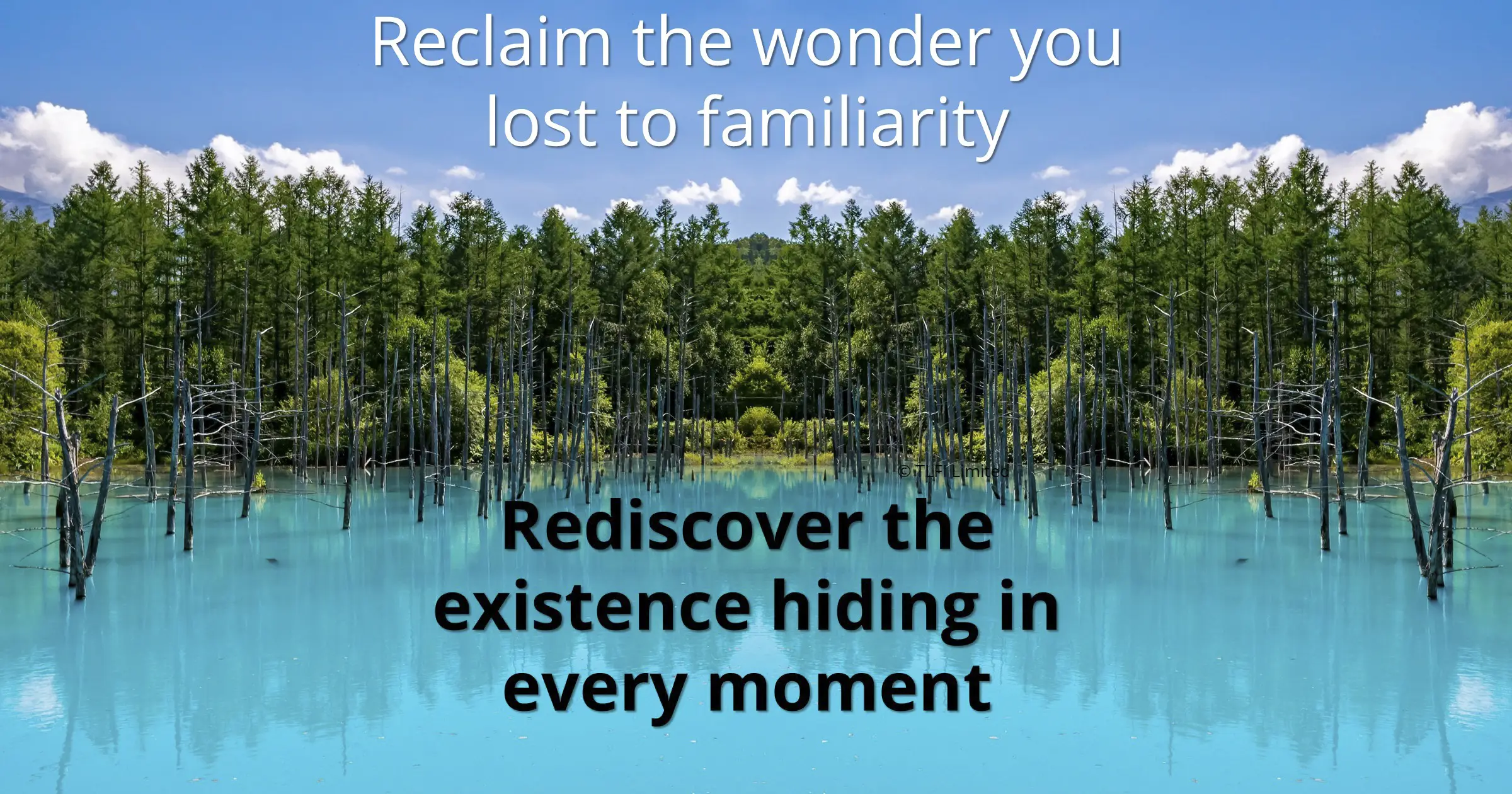
You once possessed a natural capacity for wonder, seeing each experience as new and remarkable, approaching the world with fresh eyes that found magic in ordinary things. Children live in this state effortlessly, marvelling at insects, captivated by clouds, delighted by patterns of light on water. Yet somewhere along your journey into adulthood, you may have lost this quality through the grinding familiarity of repeated experiences and the relentless pace of living. Along the way, wonder became categorised as childish, something to be outgrown along with fairy tales and imaginary friends, dismissed as impractical daydreaming that has no place in adult life. This loss represents one of the great tragedies of conventional maturity, yet few people recognise what they have sacrificed in the name of growing up.
Wonder is not childish, but rather it can be a sophisticated spiritual state that recognises the astonishing miracle of existence itself. When you truly contemplate that anything exists at all rather than nothing, that consciousness arose from matter, that you somehow became aware of your own awareness, that the universe organised itself into stars and planets and eventually into beings capable of questioning their own existence, you encounter genuine wonder. This is not naive optimism or denial of reality’s difficulties but a choice to remain aware of existence’s mystery and beauty, even as you handle necessary tasks and navigate genuine challenges. You can acknowledge suffering whilst still marvelling at the intricate complexity of a single flower. You can face difficulties whilst remaining astonished that you are here to face them at all. Wonder does not require perfect circumstances but rather a shift in perception that refuses to take existence for granted, simply because you have become accustomed to it.
Wonder must be cultivated deliberately because your default mode moves towards familiarity and automation. You can actively seek wonder in so many ways every day. Wonder can be found in nature’s endless creativity, in human ingenuity or artistic expression, in the miraculous workings of your own body and in the mysterious depths of your own mind, to name just a few. Take a moment to simply watch how your hand moves according to your intention, consider how your brain translates chemical signals into the experience of taste, or observe how thoughts arise seemingly from nowhere. These everyday things become invisible through repetition unless you consciously choose to see them. This practice of simple observation counteracts the deadening effect of routine that turns your life into an endless series of automatic responses.
When you approach existence with wonder, you are essentially saying yes to the adventure of being alive, embracing its uncertainty and perpetual newness, rather than trying to make everything known, controlled and safely predictable. Wonder opens you to possibilities, where cynicism sees only limitations. It keeps you curious and allows you to be surprised, whereas jadedness expects disappointment. Wonder is the antidote to the cynicism that poisons so many lives, the doorway back to the enchantment that makes existence worth experiencing rather than enduring. This does not mean forcing false positivity or pretending difficulties do not exist, but rather refusing to allow hardship to close your eyes to the nature of the reality you inhabit. You can hold both truth and wonder simultaneously, acknowledging what is difficult whilst remaining astonished by what is beautiful and in this balance, you discover a way of being that neither denies reality nor succumbs to the weight of taking it all for granted.