Thinking beyond the reactive mind with conscious action
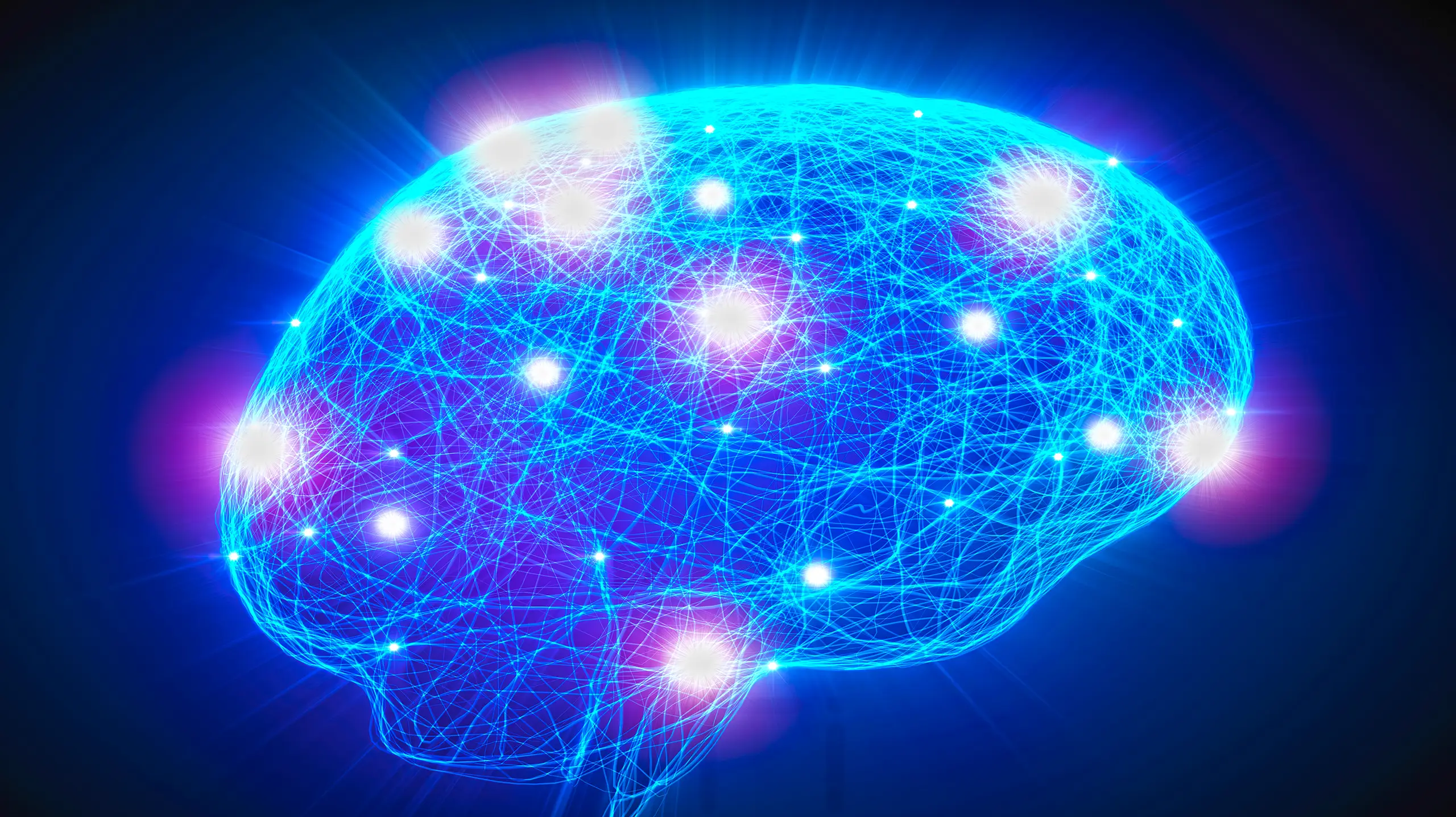 Intelligence can be defined as the ability to reason and solve problems, to think abstractly, to comprehend complex ideas, and to learn from experience. It also includes the capacity for logic, planning, understanding, and self-awareness, as well as your ability to perceive information and retain it as knowledge to be applied towards adaptive behaviour in your life. From a psychological perspective, intelligence defines the ability to think, comprehend, and perceive your surroundings.
Intelligence is not limited to a high Intelligence Quotient (IQ), computer learning (Artificial Intelligence or AI) or the ability to analyse complicated problems. It is the capability to perceive, comprehend, and adapt to your environment. Intelligence can be understood in two broad categories: passive and active intellect. Passive intelligence is the ability to distinguish between one thing and another, but without free will, as the choice is pre-determined or pre-programmed. Animals, computers, artificial intelligence (AI) and many mechanical and psychological constructions are typical of systems that operate through passive intelligence.
Before going further, it is worth being clear about what active intelligence is not. It is not the same as having a high IQ. A person with exceptional analytical ability can still operate almost entirely from reactive habit, ego-driven impulse, or pre-conditioned response. Conversely, someone of ordinary academic background can exercise genuinely conscious, reflective thought in every area of their life. The measure is not how much you know. The measure is what you do with your mind when it matters. It is not artificial intelligence either, and this distinction matters more than it might first appear, particularly now that the term is being applied so liberally to computational systems. Most artificial intelligence in current use builds associations between words, phrases, and images by processing enormous quantities of existing text. The system learns that certain words appear near other words. But it does not understand any of it. A correlation reinforced by repetition is essentially the opposite of active intelligence, which can question what it has heard most often, examine whether a common assumption is actually true, and arrive at a conclusion that contradicts received wisdom when the evidence calls for it. Active intelligence is the real ability to think. Not to process. Not to associate. To think.
The term active intellect first appeared in Aristotle’s work “De Anima.” Students of philosophy continue to debate Aristotle’s intent, as the term was implied rather than defined. During the medieval period, “Intellectus,” a translation of the Greek philosophical term “Nous,” became widely used to mean understanding linked to metaphysical and cosmological thought. It became a source of intense discussion as various thinkers sought to reconcile their commitment to Aristotle’s account of the body and soul with their own theological commitments. Some attributed higher forms of intellect to the Creator, Universal Intellect, or God. The argument was never merely academic. It touched on something people felt to be true from direct experience: that there is a quality of thinking which feels different from ordinary mental chatter, and that this quality seems connected to something more than personal habit or conditioned response.
Active intelligence entails engaging with knowledge, and often with inner intuition, in a dynamic way. It builds upon passive intellect, discernment, and awareness. Rather than passively reacting to the world, active intelligence encourages clear thinking, stimulates creativity in problem-solving, and develops a capacity for continual learning and discovery. Active intelligence is the manifestation of intellect through free will: the volition to freely choose any option available to you. It is about using knowledge as a tool to shape your reality and direct your life.
Each of us differs in our ability to understand complex ideas, adapt to our environment, learn from experience, and engage in various forms of reasoning through the application of active intelligence. These differences are never entirely consistent. Your intellectual capabilities will vary on different occasions and across different aspects of your life.
As human beings, we possess higher intellect and all the faculties of life: perception, imagination, and intellection. The cognitive powers of your mind and your faculties of knowledge operate across multiple interrelated aspects. The first depends on bodily organs, while subsequent aspects are more refined in nature. Through active intelligence, you are able to combine all aspects of your intellect and bring them into life. Through the skills of Cognition developed by The Life Force Institute, your active intelligence can illuminate your life in the same way that light renders colours visible in the world around you.
In your life, active intelligence carries causality as you apply your free will. Active intelligence, combined with an understanding of yourself and the energies affecting you, offers insight into the workings of causality as they are integrated into the human mechanism. This mechanism is set up to create causality in everything you think, express, or do within your life. Each part of life, each action, each non-action, each thought, carries causality. Comprehending causality and the relationships of energies through matter and its qualities forms the basis of a knowledge that is broad in nature.
The Life Force Institute addresses the full architecture of your mind across the consciousness section, including the passive and active intellect, the structure of thought and emotion, the observer within, and the nature of intuition and higher intelligence.
Recommended Reading on Consciousness from The Life Force Institute
Consciousness – understanding what it means to think.
Understanding Thought - thought is a fundamental human activity and is an electromagnetic pulse.
Inner Knowledge - the intuitive understanding that arises from within yourself.
Cognition - entering the stillness of the mind to grasp the power of conscious thought.
Active Intelligence - the role of free will in shaping the direction of your life.
Continued exploration in aspects of Knowledge
Knowledge - illuminating your life through insight into principles that shape existence.
Metaphysics – what is the basis of reality?
Consciousness – understanding what it means to think.
The energies of life - explore the many dimensions of energetic existence.
Figures – how the work of influential esoteric & spiritual teachers relates to The Life Force Institute.
Further information
You can access our webshop for information available from The Life Force Institute. A blog is available to keep you updated with new information. Copyright © The Life Force Institute, all rights reserved.