Reconnecting astrology with astronomy – recalibrated to cosmic actuality
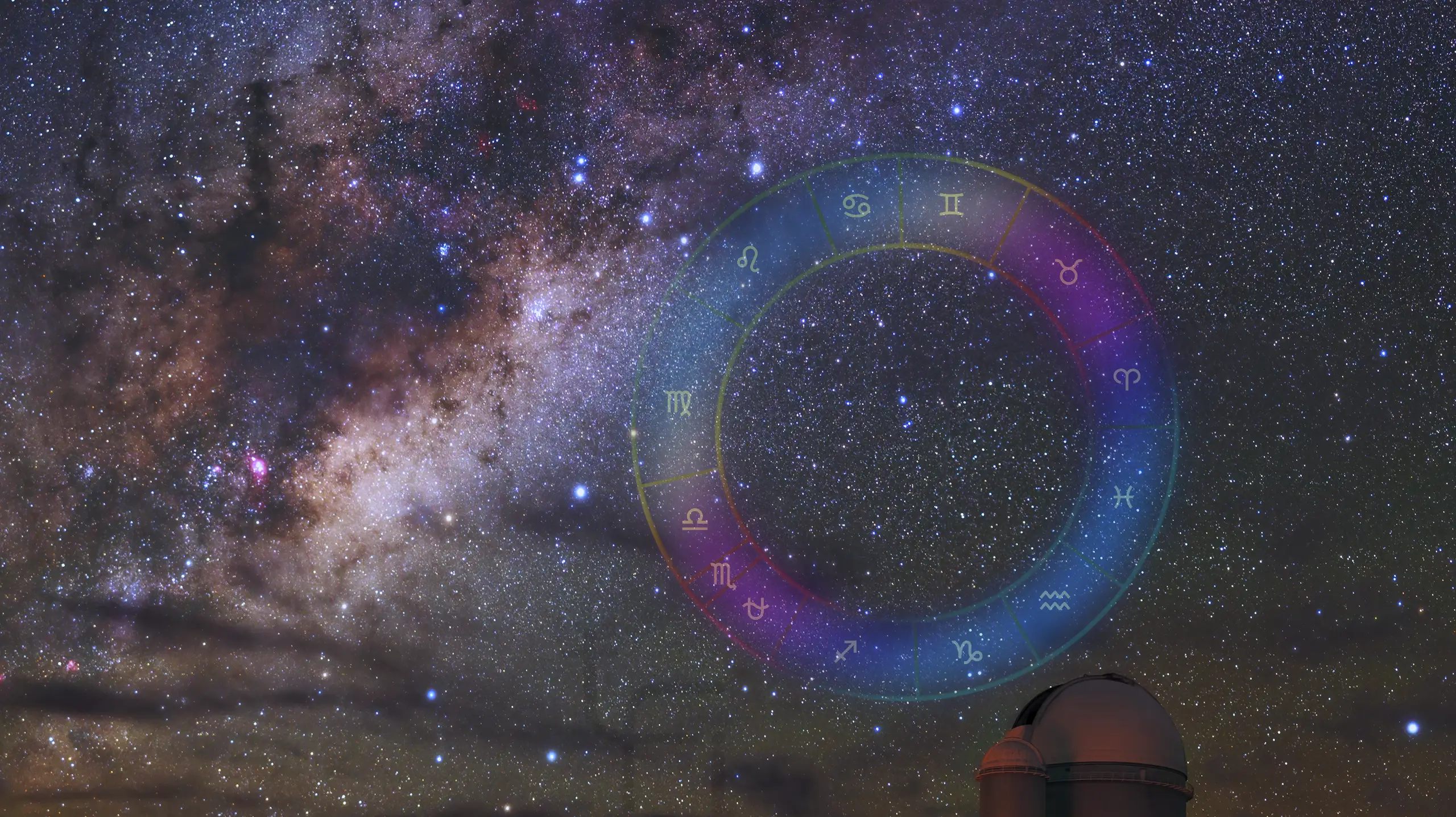
Astronomical Astrology aligns with the science of astronomy and the real observations of the Sun, Moon and planets across the sky. It factors in both the precession of the equinoxes and the actual dimensions of the constellations to determine how the energies around you can affect your life, govern your psyche and affect your reactions.
Many of you may have systematically made use of mindfulness techniques to stop, pause and become aware of what is transpiring in the moment. Alternatively, you may have used meditation as a respite from your emotions, thoughts and feelings. However, what is it that makes you act, respond, think, believe and feel in the manner in which you do? What is the trigger that presses your emotional and subconscious buttons, or why do you respond in a particular fashion? The answer to these questions may be considerably more complex than you originally conceived, as you look out into the greater universe.
There is far more that is not seen than can be seen. Consider that everything in the universe is energy. Absolutely nothing within the cosmos is by accident or fortune. All follows well-prescribed patterns and flows of energy which form the basis of all matter, all thought and the reality you experience. Physics has long established that matter itself is, at its most fundamental level, comprised of energy. What Astronomical Astrology informs us is that the energy fields generated by the Sun, Moon and planets are not separate from the energy field of the human being; they interact with you continuously.
The awareness, knowledge and comprehension of the energies that affect and confront you form the underlying basis of the Life Force Institute’s teachings. The energies shaped by the Sun, Moon and planets as they transit through the constellations have a direct effect upon you, and form the foundation of the Life Force Institute’s Astronomical Astrology.
Astrology has been steeped in myth and superstition for centuries, yet it has most recently been held separate from the science of astronomy and the observation of the stars. With Astronomical Astrology, these two disparate areas are brought together, producing a form of astrology backed by science and the real observations of the Sun, Moon and planets moving across the sky. This advanced form of astrology accounts for the full motion of the planets and stars, including the precession of the equinoxes produced by the long term wobble of our planet and the reality of the dimensions of the constellations. In short, it is astrology recalibrated to match what the sky actually shows.
 In astronomy, the zodiac is a band of constellations present behind the path which the Sun, Moon and planets traverse across the sky, as seen from Earth. The zodiac occupies a small eight degree view on either side of an imaginary line known as the ecliptic. The ecliptic is the plane of Earth’s orbit around the Sun, which in effect traces the apparent path of the Sun’s movement around the celestial sphere over the course of a year.
The constellations of the zodiac are named after figures, animals and objects drawn from Greek or earlier mythology. The ecliptic passes directly through thirteen constellations: Aries, Taurus, Gemini, Cancer, Leo, Virgo, Libra, Scorpius, Ophiuchus, Sagittarius, Capricornus, Aquarius and Pisces. The ecliptic also passes very close to the constellations of Auriga, Corvus, Cetus, Orion and Sextans, which means that on occasions the Moon or some of the planets may actually traverse these additional constellations. The Life Force Institute identifies this group of 18 constellations as the extended zodiac.
This distinction matters. A system working only with the traditional 12 constellations is, by definition, working with an incomplete map. The Sun, Moon or ruling planets may, on the day of your birth, have been positioned in one of these additional constellations, carrying energies that a conventional astrology would never consider.
 The reason why the Moon or some of the planets may appear in constellations beyond the ecliptic has everything to do with orbital angles relative to the ecliptic plane. The planets of the Solar System do not orbit in the same plane. Each planet orbits the sun in a plane which varies by a small tilt relative to the ecliptic plane. Pluto, Mercury and Venus have the greatest variance, at 17.14 degrees, 7.01 degrees and 3.39 degrees respectively to the ecliptic. Examining the effect of the tilts in the orbital planes of each planet means examining the planet at one point in its orbit. The planet will be above the ecliptic by the maximum designated degree, transition through the ecliptic plane and be the same degree below the ecliptic at the opposite point in its orbit around the Sun. Taking Saturn as an example, that means if at one point in time it were at 2.49 degrees above the ecliptic plane, then 5,379 days, 14 hours, 38 minutes (roughly 14.7 years) later, when it has progressed through half an orbit, it will be at 2.49 degrees below the ecliptic. This variation in the tilt of the orbital planes of the planets means that on occasions they will be seen to stray outside the eight-degree window of the ecliptic that defines the standard zodiac. The Moon’s orbital plane is tilted at around five degrees, which similarly results in the Moon often appearing in constellations outside the normal zodiac.
These are not theoretical margins, errors or variance. They are measurable, observable deviations that any good telescope or ephemeris will confirm. When a planet strays beyond the standard zodiac boundary, it is physically present in a different constellation, interacting with a different set of cosmic energies. Ignoring this is the equivalent of misreading the instrument.
The main forms of astrology recognised by most people are tropical astrology and sidereal astrology. At the core of each system, both share a great deal in common. However, there is one critical difference. Sidereal Astrology continues to move the dates for the constellations forward to account for the precession of the equinoxes. Tropical Astrology, by contrast, is fixed to a position set approximately 2,000 years ago and has not moved since.
That two thousand year gap is not negligible. Due to precession, the Sun’s position against the background of the constellations continuously shifts. Across two millennia, this amounts to a displacement of around 24 degrees, nearly an entire constellation. A tropical chart drawn today is telling you where the Sun would have been in relation to the constellations in the first century, not where it actually is now or on the day you were born.
 Most systems of astrology divide the sky into twelve equal portions of 30 degrees each, designating a star sign based on when the Sun appears in those regions at midday throughout the year. The 30-degree division of the celestial sphere by standard astrology is a convenience, not a reality. The actual constellations of the zodiac vary considerably in size, with some spanning fewer than 7 degrees of the ecliptic and others extending beyond 40 degrees. Dividing the sky into twelve neat, equal segments bears no relationship to the sky as it exists.
While the astrological star signs carry the same names as the astronomical constellations (the zodiac), they rarely correspond to the real position of the Sun, Moon or planets in any of the astronomical constellations of the zodiac.
Most forms of astrology do not align with the science of astronomy due to two specific factors: the precession of the equinoxes and the actual dimensions of the constellations. A small number of authors have come close to addressing both. Stephen Schmidt, in his 1970 book “Astrology 14” and Walter Berg with his book “The 13 Signs of the Zodiac”, each took into consideration both drift and dimensions, though neither carried the work to its full astronomical conclusion.
Many people may find this new form of astrology difficult to accept at first, having been associated with a particular star sign for the whole of their lives. The cornerstone of Astronomical Astrology is the actual, observable location of the Sun, Moon and planets in relation to the 18 constellations of the extended zodiac. However, Astronomical Astrology does not dismiss what you have believed throughout your life. Thoughts are their own form of energy, and they can build a layer of experienced reality around you. You may well find that you exhibit characteristics of the star sign you have always believed yourself to be. At the same time, you will find that your deeper, subconscious reactions are governed by the energies of your actual astronomical position at birth.
Both things can be true. The conscious identity you have built around a star sign has a real energetic weight to it, shaped by years of belief and self-reference. But beneath that sits something based on actuality: the astronomical conditions present at the moment you drew your first breath. Astronomical Astrology works with both layers, not in opposition to what you know of yourself, but in addition to it.
What changes, once you understand this, is that you stop wondering why you react the way you do in certain conditions and begin to see the underlying energetic influences of those reactions clearly. That ultimately is the purpose of Astronomical Astrology.
Recommended Reading on True Astrology
True Astrology - the starter page for a unified view of Astrology and Astronomy.Astronomical Astrology - removing myths, reconnecting astrology to cosmic actuality.
A Scientific Approach - how Earth's rotation, orbit and precession impact astrology.
Precession of the Equinoxes - why Earth's wobble shifts your zodiac sign over time.
Constellation Dimensions - from 6 to 45 days, the reality most astrology ignores.
Validation - how to verify Astronomical Astrology yourself, no faith required.
Encoded at Birth - how the Sun, Moon and planets encode your defaults & reactions.
Astrological Sign Dates - three sets of astrological dates and what are the differences.
Cosmos Influences - how universal energies and planetary fields affect you.
Search for other astrology topics on our site.
Further information
You can access our webshop for information available from The Life Force Institute. A blog is available to keep you updated with new information. Copyright © The Life Force Institute, all rights reserved.