
When Should I Meditate
A usual query which people ask is when should I meditate? While there may be various schools of thought on the topic, there is no golden rule as to when to practice meditation as it can be unique to each one of us as individuals. However, many meditation instructors do concur that the most important aspect is to create some time for you, regardless of the time of day or any kind of timetable.
While formal meditation practice in a peaceful location where you are less likely to be interrupted is optimal, there need be no reason why you cannot employ aspects of mindfulness and meditation at any other time in your life. Without a doubt, it can frequently be in these hectic or stressful moments when you require the benefits of your mindfulness or meditation practices the most.
There are lots of times all throughout the day when you can apply your attention to help bring elements of calmness within you. When you travel on a train or bus, you can bring your attention to your breath. As you stroll down the street or take a walk through the park, you could focus on the sounds you hear or the motion of your legs. These practical and straightforward aspects of mindfulness should be incorporated into your daily life, so that mindfulness is not something separate, but is part of living.
In a similar way undertaking full meditation activities must not be treated like a chore which is slotted into an established timeslot each week. While carrying out meditation at a particular time of day can be beneficial, the reason is that doing your meditations at an established time builds a sense of commitment and focus within your meditation practice. Some people discover that it is best to do their meditation in the morning, yet if you are proverbially not a morning person then forcing yourself to do a morning meditation can be counterproductive. Others find it is best to do meditation in the evening to help them unwind and destress from the day. You may find that practising meditation after eating can be less effective, as your physical body is more focused on digesting your food. However, some people have actually discovered that after eating, their body is focused on food digestion, so their minds can be more focused on meditation.
The takeaway from all of this is that meditation can be done at any time. Find a time which works for you, and make use of that time routinely when you are starting to meditate. Once you have become familiar with your meditation techniques and it has become integrated into your life, then there is absolutely no reason why you cannot do meditation at any time throughout the day or night. Ultimately the most important thing is that you invest the time to do meditation on a regular basis to ensure that it becomes a natural part of your life.
Most of the aspects of Breathe with Purpose and Life Force Mindfulness have been developed to make sure that they can be applied at any time. The key is that via practice and repetition, you program the activities into your mind so that they can be conveniently recalled and applied when they are needed.
Savour the Joy in Life
When you are joyous, happy or in a positive state of mind, your heart and mind, are open to brand-new things. Savour every positive experience and emotion such as joy, to bring a newfound sense of wonderment to life. Even something which might have seemed ordinary can begin to hold a greater significance as you take pleasure in every moment that life offers.
Taking the opportunity to savour joy can be as simple as paying attention to the things that you take pleasure in or that make you happy. If your mind strays try your best to maintain focus on the joyous moments. Spending time to linger on these positive feelings that arise is an incredibly straightforward form of mindfulness. This can lead to a happier outlook, increased self-worth and better resilience when faced with stress and anxiety. If you savour the joy and happiness, it can bring appreciation and positivity to all aspects of your life, and you can gain greater access to your intuition and creativity. This can be partly because you are not burdened or blinded by negative thoughts and feelings which so many of us have on a daily basis.
The process to savour positive elements of life is relatively simple. If you have previously practised some type of mindfulness, you are partway there. Savouring joy is about being aware and centring your attention on some positive experience or sensation in your life. Savouring the people, experiences and things in your life enables you to grow in mindfulness, though it does not require formal meditation.
To initiate this technique, invest some time to recollect a recent experience that you found enjoyable or satisfying. That could be anything, yet if it entails some sounds or physical activity such as a walk on the beach, having a bite to eat with a new mate, or having fun with a pet, it will certainly be easier to keep your focus. Make the effort to recall that positive moment and immerse yourself in the memories. While it may not last forever, really savouring the moment can make it seem like time has virtually stopped. After that choose an additional recent event or experience which gave you satisfaction or enjoyment, and once again recapture the feelings of joy. You are most likely to find that it is much easier to stay in the moment, as the feelings of joy and happiness from your last sensation operate like a magnet, drawing in the positive sentiments. With the increased sentiments, you will be able to sustain a stronger focus on the happy moments.
Our daily lives are full of opportunities to appreciate, and express gratitude for the things that bring us joy and a sense of satisfaction and happiness. Savouring these positive moments can provide you with an oasis amidst the challenges of life. Gradually, you can develop a growing awareness of the origins of joy, satisfaction and happiness which can boost the positive influences in your life.
There are very clear benefits of recollecting these moments of joy and happiness, including improved physical and psychological health. While savouring can be beneficial, it does not deny the reality of what is difficult in our life such as challenging emotions. When you find yourself in an unpleasant mood, consider that you cannot be open to new ideas, regardless of just how fantastic or amazing they are. Without some joy in your heart, life can seem to be slow and frequently dull or uninteresting. However, this practice of savouring can enable you to bring positivity to your life by paying attention to what feels good.

Do Not Bury Your Emotions
Usually each of us does not have issues with thinking or expressing what would be identified as positive thoughts or emotions. Unfortunately, it is a normal human response to avoid or wish to bury difficult emotions, and even in some cases those which might seem to be neutral but have become taboo as a result of societal norms. Sequestering your emotions and thoughts can be an appropriate way of managing them from a mental mind standpoint. These subdued emotions will normally not create problems when you undertake mindfulness or basic meditation, as the power of your mind can maintain them metaphorically under control. Even if these concealed thoughts or emotions are not leading to problems, be aware that you have pushed them aside. Suppressing an emotion does not admonish an emotion. The emotion still exists within you, secreted in the background of your mind and subconscious. So for your own wellbeing, you should take the opportunity to understand them whenever the time is right.
The state of affairs changes considerably when you start on the pathway to the awakening of your inner light. It is very important to know that suppressing or subduing thoughts and emotions, especially the unfavourable ones, can be perilous as you advance on your journey of attunement or advanced meditation. As you progress with your meditation techniques, increasing levels of the power of your Life Force enlivens your form. These energies flow into all parts of your being from the energy centres and along the meridians. As these energies circulate throughout the human mechanism, their increased energy can activate thoughts or emotions which have been hidden, and may have laid dormant for years or even numerous lifetimes in the body’s think centres and chakras. When these energies trigger one of these suppressed thoughts or emotions, the intensity of that thought or emotion will be increased as a result of the greater energy levels from your awakening. Hopefully, you can now comprehend why it is so necessary to know yourself, to be aware of and understand all of your thoughts and emotions, even those which you might not wish to deal with.

Anchor Your Reactions
When you find yourself in the middle of a negative or unproductive reaction, perhaps you may have noticed how your breathing often becomes superficial and more rapid, and you may well feel unsettled in the stomach area, or a pulsing in your head. Sometimes your face might become flushed, or your chest area could start to tighten up as your emotions seem to start running out of control. After that, it can become like a slippery slope as thoughts can arise and emerge, which seem to make the matter even worse, and your emotions seem to go into overdrive.
There are many different techniques which can be leveraged to help you stop sliding deeper into this reactionary process. Simple breathing with conscious intent, can be a very effective means to stop this slide, anchoring your thoughts to one point. With yourself anchored, you have the opportunity to pause and choose to stop the continued reactionary process. The next time when you experience an adverse reaction to anything in life, do your utmost to apply some conscious breathing. By engaging your mind to bring focus to your breathing for a couple of moments, you can start to regulate your reactions. Then as you begin to take deeper and more rhythmical breaths, they can help you to find an anchor for your calmness. Allow this anchor to grab hold, and steady your emotions as you continue to breathe consciously.

I am the Spark of Life
We are all part of the Universal Force which binds the galaxy together, and preserves the structure of the Universe as we know it. As Life Force beings, we are the individual components of the Universal Force, in much the same way that stars form part of a galaxy. Our Life Force energies are the component of the Universal Force which is unique to each one of us, and are what some consider the spirit or soul. As we reside on this physical plane of existence, within each and every one of us as human beings resides the Spark of Life, which is the true unemotional part within you. It is the creative principle of the cosmos within you to enliven you within this material existence.
The Spark of Life is an important part of you. It not only binds your Life Force to this physical existence, it importantly is the key which allows you to tap into the creative component of the Universal Force within you. For those individuals who step onto the path of knowledge, the Spark of Life can be very beneficial. Through right thoughts, you can leverage the potential of the Spark of Life to raise into higher states of understanding and awareness.

Focus on What You can Change
Often in life, we become side-tracked by matters that annoy, upset or perturb us, which can lead to overthinking. When you start to overthink something, your mind can become overloaded and overwhelmed as associated thoughts and conditioned reactions are replayed over and over in your mind. The original thoughts have triggered conditioned thoughts, emotions, feelings and reactions. These aspects of overthinking can pull you down the path to additional worry, concern and sometimes stress.
At such time, if you were to stop or pause to carefully examine your life, you may discover that some of these matters are totally out of your control. You may realise there are some situations in life which you could not change in a proverbial million years. While we may recognise this in hindsight, many of us still attempt to change these apparently immutable aspects, which can lead to more anguish and upset emotions.
Rather than dwelling on what is beyond your control, you can choose to take a different path. Instead redirect your thinking to focus your intent on the things which you can change. As you begin to shift your focus, you will feel more in control of your life. Those aspects which you cannot control will usually lose some of their significance, or may completely fade away.
I Cannot Clear My Mind
When attempting to meditate, do you have problems clearing your mind of thoughts? Often those thoughts keep on coming back, and you seem destined for failure no matter how hard you try. The good news is that this is a very common challenge encountered by anyone starting meditation. It is not a sign of failure that you are having difficulties making your mind clear, quiet or supposedly blank. Even those who have practised meditation for many years may at times have problems. The most important thing is to keep persevering, and if necessary try different approaches or techniques, until you find one which works for you.
While quietening your mind is an important goal for any meditation, realise that each of us will achieve different degrees of success. For some people attaining the ultimate goal of full quietness of mind may not be possible, but that does not mean you cannot meditate.
The first and foremost thing to realise is that your very efforts to clear or quieten the mind can often be the cause. Your mind becomes filled with the distractions of the very same ideas you are making an effort to clear. If this is the case or you have a very rowdy mind, then you should shift your efforts to achieving a small area of calmness.
The second obstacle most people face is that they try to erase or eliminate their thoughts. The ability to quell or eliminate thoughts is very difficult to achieve for most of us. So the best approach for success is instead to push your thoughts aside or to the background, thereby diminishing their presence. With time and effort, you can build the skills to be observant of your thoughts, acknowledge them if necessary and push them aside. Then as you push more of these thoughts away, you can establish a small beachhead of quietness in your mind. Be happy with this achievement, as it is an important milestone. As you practice more, you will find that you can expand the quietness outwards, pushing your thoughts farther aside and into the background.
A very useful technique which can be utilised to help with meditation or even mindfulness is called Ekagrata, which simply means focused thought. Applying Ekagrata enables you to focus on one thing, such as your breath, repeating a mantra, or mindfully shifting your attention to a specific thought. As a master of your mind, you are not thinking of everything at the same time, you are being purposeful and focusing on one thing at a time. If stray thoughts enter your mind, you acknowledge them and push them aside to achieve that focus of mind which is Ekagrata. Become the master of your mind with Ekagrata, so that you may learn to clear your mind.

Making Astrology and Science Work
For many years those that believed in astrology were seemingly at odds with those who trusted in the sciences. This is predominately because the observable locations of the Sun, Moon and planets relative to the constellations do not match with the star signs of astrology. While some kinds of astrology such as sidereal astrology are closer to the real positions, there are still significant differences. It had seemed inconceivable for someone to believe in both astrology and the sciences until now, however that all changes with the new paradigm of Astronomical Astrology.
The foundation of Astronomical Astrology is the actual observable locations of the Sun, Moon or planets relative to the eighteen constellations of the extended zodiac which fully aligns with the science of Astronomy. An extended Zodiac is necessary because the orbits of the Moon and the planets are not in the same plane as that of the Earth. Consequently several of these celestial objects can be observed either above or below the ecliptic (the path of the Sun’s motion traced across the celestial sphere throughout a year due to the Earth’s orbit).
The mechanics of the motion of the planets, together with our frame of reference, are explained in considerably more detail at Astronomical Astrology. The greatest cause for the big difference between the astrological constellations to what is observable, is due to a phenomenon labelled the “Precession of the Equinoxes”. This precession of the equinoxes moves slowly westwards across the sky over a cycle of 25,772 years, creating a drift in the observed position of the astronomical constellations. What this means is that each astrological star sign typically will include the astronomical constellation that was formerly to the east. There is a further complication by the fact that the constellations are not twelve equal 30-degree sectors of the ecliptic. Further adding to this complexity, each of the heavenly bodies transverses each constellation at a perceived angle and a different elevation. Once all of these variables are collated, the full picture of Astronomical Astrology emerges as the predicted location of any celestial body aligns precisely with the astronomically observable facts.
This new type of Astrology might be hard to believe for some people, as they have connected with being a particular star sign for most of their life. Importantly Astronomical Astrology does not disregard the aspects of what you have believed throughout your life. It has to be realised that thoughts are their own energies, which can form a layer of reality around you. So you may find that you exhibit aspects of the star sign you think you are, due to your thoughts. While at the same time, you will discover that you react subconsciously as a result of the energies which are the real astronomical influences. This is the nature of the reality of our lives, as we are affected not only by aspects of Astronomical Astrology, but just as importantly we are strongly influenced by our thoughts.
What is the Force within Me?
There have been numerous books, films, texts and beliefs which have pertained to some ostensibly mystical power of the Force. Some have revealed that the Force is an energy field created by all living things, which binds the galaxy together. While others have indicated that the Force is within us, so what is this Force and where is it?
The truth of the matter is that we as humans only comprehend a tiny part of the cosmic equation of life, and that there are undoubtedly many aspects to what is loosely referred to as the Force. If you approach the question with an open mind, one which challenges and learns from true knowledge, you might discover that both and all are the Force as it exists on many different levels.
The living energies which exist within all of us is your Life Force. You may well relate to your Life Force energy as an inner awareness, your true essence, your spirit, or your soul, to identify but a few. Some might see this concept as elusive, obscure, intangible and frequently a secret which is concealed within religious beliefs. Though there is an overall acknowledgement from all quarters that we as humans contain an energy which is something not yet empirically identified. This energy is your very own Life Force, part of a much greater whole, yet it is unique and distinctly assigned to you. As such, you are part of the Force and the Force is within you as your Life Force.
The Universal Force is present throughout the universe. Open your mind, even if just for a short moment, to broaden your consciousness outside of the boundaries of time and space. It is an energy which is throughout all of the atoms and particles; in addition to existing throughout all galaxies of the cosmos, transcending and within all the trillions upon trillions of stars and planets within the universe. The Universal Force is within all time and space, it is this force which surrounds us and permeates us. It is the Universal Force that binds the galaxy together and preserves the structure of the Universe as we know it. Without the Universal Force, all matter would decline into an uncontrolled state of entropy.

More than a Good Thought
There is a strong correlation between being happy and optimistic to being physically well. Typically, people who express positive thoughts and emotions are at a reduced risk of becoming ill. Feeling happy or having positive experiences is linked with better general health or more content living. So is there more to this than just positive thinking?
Yes, this is more than just thinking a good thought. Positive psychology is a branch of psychology focused on the character strengths and behaviours that allow individuals to build a life of meaning and purpose. While many other branches of psychology tend to focus on dysfunctional aspects of the human mind, positive psychology is centred on helping people become happier on many different levels. This new branch of psychology encompasses a variety of techniques that focus on developing positive thoughts, positive emotions, and developing positive experiences. You can see how this new form of psychology extends beyond thoughts alone to bring forward the complete picture of the human system of wellbeing.
Positive psychology is often confused with positive thinking, which is purely about thinking positive thoughts, rather than changing your way of thinking into a different frame of mind. Positive psychology works at a deeper level on improving our positive character traits, such as loyalty, humility and integrity. It does not discount that there are negatives that impact our lives. Instead, positive psychology aims to look at the situation to better understand human experiences and determine how to best foster positivity and good thinking. These aspects of positive thoughts are then reflected and reinforced by positive emotions and feelings. As we live in a physical world, if these positive thoughts, emotions and feelings can be bolstered by positive experiences, it creates a more powerful narrative than any of the elements individually. We can all leverage aspects of positive psychology so that we can thrive rather than just survive.
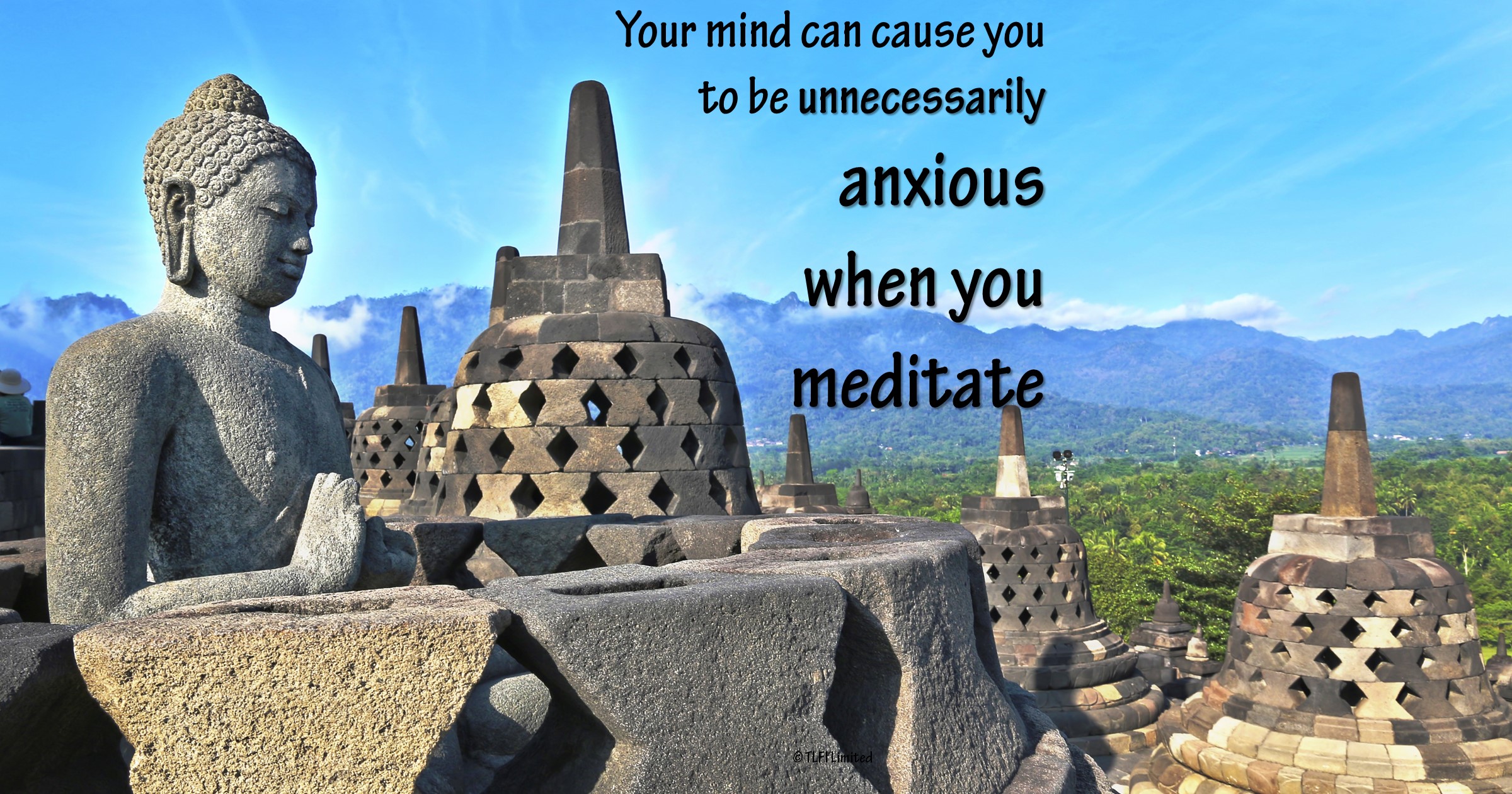
Why am I Anxious when Meditating?
A common feeling that you may experience when starting to meditate is that of being anxious or nervous. First up, do not worry, as many people experience the same feelings when they do meditation, especially when starting or if they have had a gap or lapse in doing meditation.
When you first start meditation, you may feel uncomfortably awkward or out of kilter in some undefined way. This can be especially true if you lead a busy life, or there are lots of things which typically occur around you. These feelings are completely expected and a natural sensation as your mind has been used to the normal hustle and bustle of everyday life. The change of pace when you begin meditation can trigger feelings of anxiety or nervousness to name just a few.
If you do feel uneasy when practising meditation, then be aware it is your mind which is generating these sensations. It can be common for your mind to generate a FOMO (fear of missing out) as it attempts to re-establish its control over your life and your way of thinking.
There are several different ways to address your anxiousness when meditating. One obvious, but often overlooked method is to simply tell yourself that you are not anxious and it is just in your mind. Another effective way to help you feel less anxious is to simply lower your gaze to a spot on the floor or ground before you, rather than closing your eyes. Some other breathing techniques, such as Breathe with Purpose or Life-Force Meditation can assist you to become more comfortable when you start out meditating through the use of specially structured activities.

Stress is an Energy Overload
Identifying and managing stress can result in a more balanced and healthy life. All of us experience stress in different ways due to our own unique experiences and lives. Sometimes you may be able to immediately tell when you are feeling stressed, yet at other times you might keep going without recognising the signs. You might only comprehend just how much stress was present in a situation when it no longer exists. In these circumstances, it is typical that as soon as the reason for the stress has been removed, you may all of a sudden feel like a substantial burden has been lifted. Stress can impact you on many different levels, affecting the way you behave, think and feel.
The structure and function of the brain, our minds and the nervous system are vital to mental health. However, as humans, we are far more than our biology. There are countless schools of thought regarding the origins of stress. Each of us has different ways of handling stress. Some situations that motivate you, could generate the condition of stress in another person because of their personality and the emotions they hold within
A brand-new approach to understanding stress is that stress is simply an accumulation of energy. As you experience life, your thoughts, actions and responses can result in a buildup of energy within various areas of the mind and body. If this buildup of energy is not suitably removed, the overload of emotionally charged energy will create issues for the human mechanism. This overload of emotionally charged energy will lead to what we recognise as stress.
The energies of your thoughts and emotions, especially when to the negative, can increase and flow through your nervous system. Stress intensifies this energy into the body, which then produces additional emotionally charged energies. If you are under lengthy periods of stress, these energies can increase even more. As these energies accumulate within the human mechanism causing damage like that of an electrical short circuit. It is not unusual to hear nowadays that individuals state they have become “burnt-out” as a result of stressful situations in their lives. It is the overload of these emotionally charged energies which causes damage and resulted in this burnt-out feeling.
While you should also bear in mind the more traditional elements of stress, this different view on the underlying mechanism of stress provides you with a new way to manage and control stress before it becomes a major problem in your life. When you begin to experience stress building up, find a means to release this build-up of these emotional energies for the wellbeing of yourself and others around you.
Some simple methods can be used to help you destress by draining away these emotional energy overloads. One effective method requires you to take several minutes out in meditation or mindfulness to see yourself near a lake or sea. Then while maintaining the image of the lake or sea, try to visualise this overload of emotional energy draining off into the water. Another equally effective technique is to stand on the ground as you perform your meditation, then envision the overload of emotional energies being drawn out of you into the earth. Alternatively, if you are practised in conscious breathing, then attempt to see the overload of emotional energies flowing out from you as dark clouds as you exhale each breath.
Bringing True Focus
The capability to really focus your mind is a pivotal aspect of any kind of meditation, mindfulness and certainly many facets in your life. If we were to evaluate the populace in its entirety, it would be discovered that a very small percentage of individuals have the inherent capacity to really focus and quieten their minds without concentration. While roughly two-thirds of the population will regularly struggle to bring focus to their minds. When your thoughts lack focus, it is akin to light travelling through a prism contrasted to light going through a magnifying glass. While the light transverses both the prism and the magnifying glass, what occurs to the light on the journey is very different. The same holds true of your thoughts, where you can learn how to focus your thoughts, as opposed to letting them become scattered or dispersed. This is becoming considerably more important as our awareness or attention spans are diminishing, along with our capacity to retain relevant information as a result of the arrival of social media and contemporary InfoTech.
What approaches can be utilised to aid in bringing true focus to your minds and thoughts and not on the occasional time that you remember to practice? Most techniques which are embodied in mindfulness and meditation can assist you to focus your thoughts, but you may wonder how can this work.
One of the most effective tools to achieve focus is Ekagrata. Though the techniques of Ekagrata are typically only beneficial for a tiny percentage of individuals who have actually been determined to tame their minds and invested the hours of training.
For a lot of people, making use of sounds such as chimes or gongs can provide an external stimulus which will assist in focusing your mind. People can then focus on the sound, as opposed to the various other thoughts which float around their minds. With this focus, you can then establish calmness within, which can then provide the basis for you to discover more advanced or sophisticated aspects of meditation.
Conscious breathing and techniques similar to Breathe with Purpose; which are free, can offer an alternative effective way to help focus the mind. Such techniques are notably beneficial for applying positive affirmations. These are just a few of the numerous techniques which can be leveraged to help you. The most important aspect is your ongoing efforts to bring focus to your thoughts.

Reconnect with Mindfulness
Increasingly more of us have ceased noticing many aspects of the world within and around us, especially when we live very busy lives. It is something which may not be immediately obvious as we are so entrenched in our lives. With an ever-changing world, it has become significantly easier to lose touch with the sensations of life and living. As we do, some of us start to act totally via conditioned thinking, apparently reacting unconsciously to life.
You do not need to change who you are or modify your beliefs to become a lot more self-aware. All of us have the capacity to be mindful, to take notice of and be aware of the here and now. The trick is discovering that impetus to break free from the thoughts which your mind generates to keep you living life mindlessly. Active intelligence is the act of engaging in your thought processes beyond unconscious thought, utilising both good judgment and awareness to make real choices. In all of this, it is awareness which is the fundamental key to activating choice in life.
Through the awareness of yourself and your life, which can be achieved via techniques such as mindfulness, you can break those patterns of unconscious thoughts or pre-programmed reactions. At its heart and core, the whole focus of mindfulness is about awareness. Whether that be awareness of a sensation in your body or of some other external subject, the objective is the same. The objective is to focus your mind away from the everyday thoughts of your mind.
So if you find that you have actually stopped noticing the worlds around or within you, spend some time reconnecting with your real intentions with life force mindfulness.

Be Aware as you Walk
Walking can be beneficial on many different levels. Walking has been used as a means for becoming calm, helping to quieten the mind and even for spiritual advancement for countless years. People are gradually starting to rediscover the diversion and basic enjoyment of walking. A walk can be included in a break at work or at any time of your choosing. If you are experiencing stress or anxiety, then taking a walk may well enable you to ease some of this mental anguish, frequently giving you an opportunity to bring a different perspective to the situation. While we can all appreciate that going for a walk in the country, or other nature spots may be the most beneficial, realise it is the walking which is the catalyst for your changed thinking. Simply taking a brief walk around the block or around the local park can have a beneficial effect on your day.
The basic act of choosing to go for a walk, allows you to have a change of surroundings. This change alone, may be sufficient for you to be more mindful as you are no longer immersed in the situation. The removal of yourself for a particular situation or location is just as important as the act of the walk itself. This is because you actively remove yourself from the emotional triggers, thoughts or energy which were at your previous location. With the proverbial change of scenery, you have the opportunity to enjoy the experience of the walk itself.
As you walk, attempt to be aware of the sensations within your body, such as the motion of your legs or arms, and be aware of your breathing. Depending on where you have gone for a walk, you may additionally take in more of the environment around you. You may become more conscious of the sounds which constantly float into your ears, the smells which fill your nostrils as you breathe, or even the temperate of the air or the feeling of the sun on your skin. All of these acts of awareness or observation of the world around or within you, can help to change the way you think if you allow it.
Often one of the biggest challenges is that when people go for a walk as a break, they bring their problems with them, rather than doing their best to leave them behind so that they can really benefit from the walk. Take some time out and go for a walk to avail yourself of the opportunity to be more mindful, take a break and refocus. You may well find your thinking will be sharper and your mind clearer after a beneficial break.