Where the science of celestial mechanics meets astrology
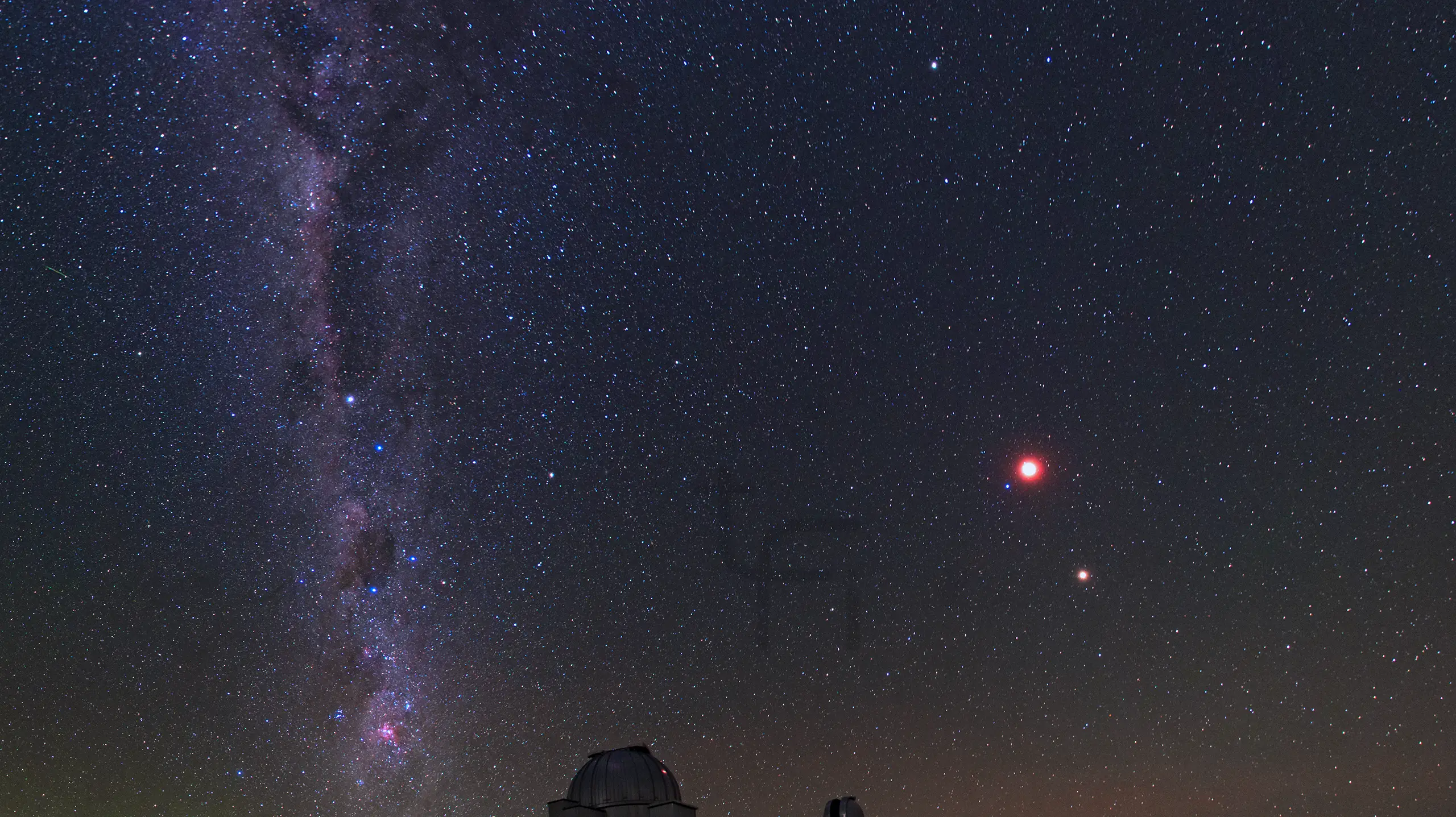 Astronomical Astrology provides a fresh perspective on astrology. It takes into consideration the diverse energies which influence our lives, and how the energies of the universe can programme patterns of reactions into your mind and subconscious.
Unlike traditional astrology, which often relies on symbolic interpretation, Astronomical Astrology is grounded in the measurable mechanics of our Solar System and the universe. It asks not what the stars mean in a mythological sense, but how the energies flowing from celestial bodies interact with the energy field of the living human being.
The Sun, Moon and planets within our Solar System each carry an established and prescribed energy and influence, inscribed with both positive and negative facets. These various ambient energies continuously influence your body, mind, Life Force, and emotions. They are the regulating forces behind everything which takes place within your lived experience.
An important concept to comprehend is that the Sun, planets and constellations do not directly send you energies of emotions or feelings. Their presence amplifies energies which you translate into positive or unfavourable aspects. The ambient energies of the solar system surrounding you will transmute according to your emotional balance and your underlying astronomical pre-programming. You have the ability to regulate your reactions by working with such aspects and maintaining your own control. You are not simply a receiver of celestial forces beyond your influence. Your state of mind, your physical condition, and the degree to which you understand these influences all determine how the energy influences you.
If unfavourable Mars energies can produce aggressiveness, then conversely, the positive expression of those same energies can develop upliftment and strength. How you react to the energies of Astronomical Astrology depends upon your physical well-being, psychological balance and emotional mindset. The energy itself remains consistent. It is how you process and respond to it that determines whether the outcome within you is adverse or favourable.
To know this is to begin understanding yourself, and how you can bring more balance and self-control into your life. For a clearer comprehension of your emotions, thoughts and reactions, you need to appreciate the influences of the ambient energies of the Solar System that are affecting and influencing everyone.
Establishing a Frame of Reference
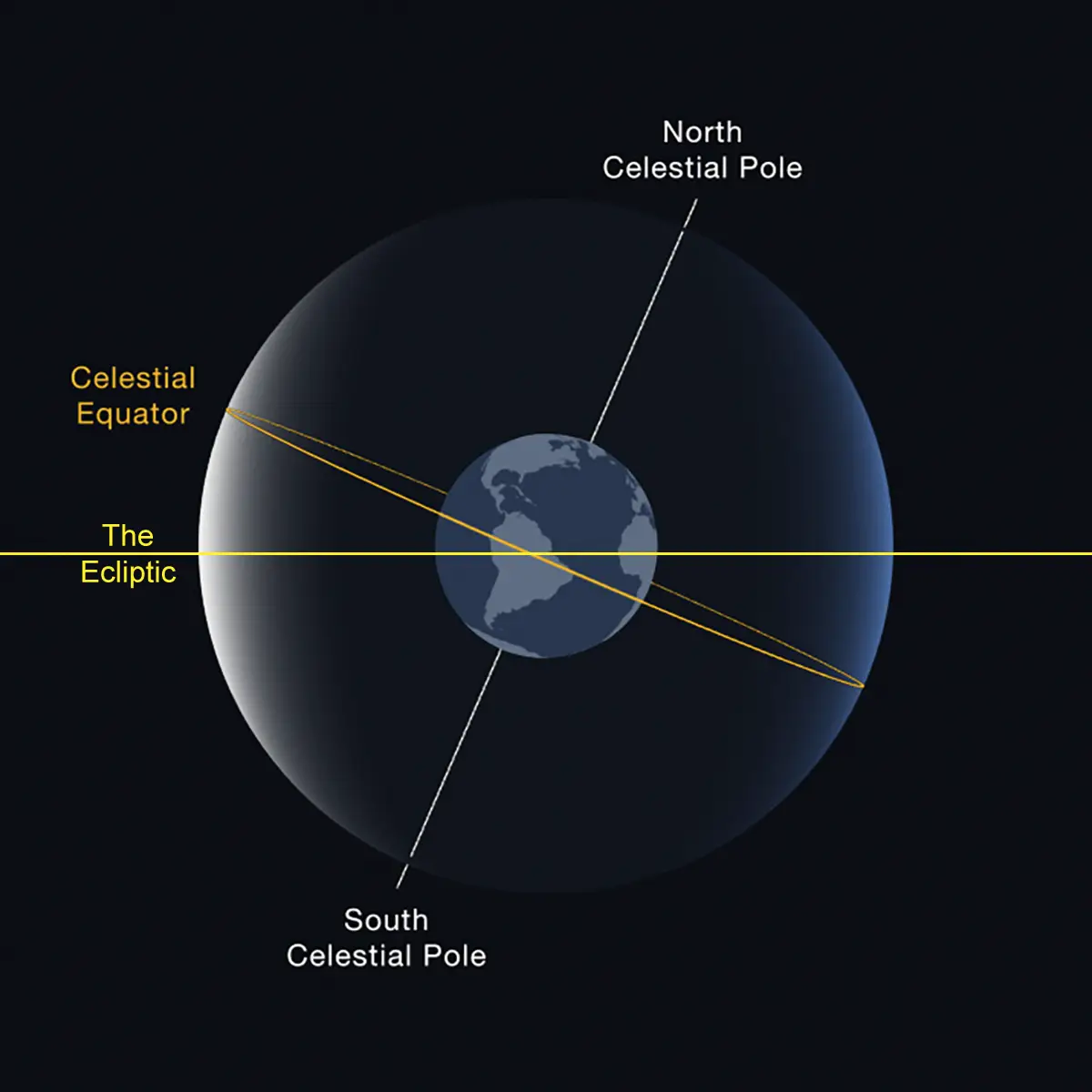 To understand the references used in astronomy, there are two very important frames of reference. The first is the ecliptic, which is the plane of Earth’s orbit around the Sun. The second is the celestial equator, an abstract projection of our planet’s equator into outer space. Due to Earth’s axial tilt, the celestial equator is currently inclined by the same amount with respect to the plane of Earth’s orbit. If you were to be standing on the Earth’s equator, the celestial equator would form a semicircle passing directly overhead. If you were to move either north or south, the celestial equator tilts towards the opposite horizon.
The ecliptic and the celestial equator intersect at two points, the equinoxes. When the Sun appears on the celestial equator at the equinoxes, everyone on Earth experiences equal periods of day and night(12 hours each).
Recognising the relevance of these two reference points is important for your understanding. They form the backbone of how astronomical and, in turn, Astronomical Astrology maps the sky, tracks the Sun’s yearly position against the constellations, and calculates the precise conditions present at the moment of your birth.
No matter where you are on Earth, you will see only half of the celestial equator’s arc, meaning you can only ever observe 180 degrees of the full sphere. Since the Earth rotates once every approximately 24 hours, the sky appears to rotate around those of us on the planet’s surface. For any object located on the celestial equator, it will take 12 hours to travel from the eastern to the western horizon. Every celestial object’s diurnal, or daily motion, occurs parallel to the celestial equator, directly tied to the rotation of our planet.
If you are in the southern hemisphere, anything north of the celestial equator will take less than 12 hours to rise and set, because most of its rotation arc lies below the horizon. Anything south of the celestial equator will take more than 12 hours between rising and setting, as most of its rotation arc remains above the horizon. For observers in the northern hemisphere, these mechanics are reversed.
The Motion of our Planet
To understand how your view of the cosmos changes, you must first comprehend the motion of the Earth itself. The Earth has three separate motions occurring simultaneously, and together they produce the changing sky, the cycle of day and night, and the seasons you experience depending upon where you are on the planet’s surface.
 The first and simplest of these is the Earth’s rotation on its axis approximately once every 24 hours. This rotation of the Earth about its axis is responsible for the 24-hour cycle of night and day you witness from the surface. It also causes the Sun to appear to move westward across the sky at roughly 15 degrees per hour. The tilt of the rotational axis at 23.5 degrees leads to seasons on the Earth and is also the reason why days and nights are not 12 hours of daylight and 12 hours of night for all locations.
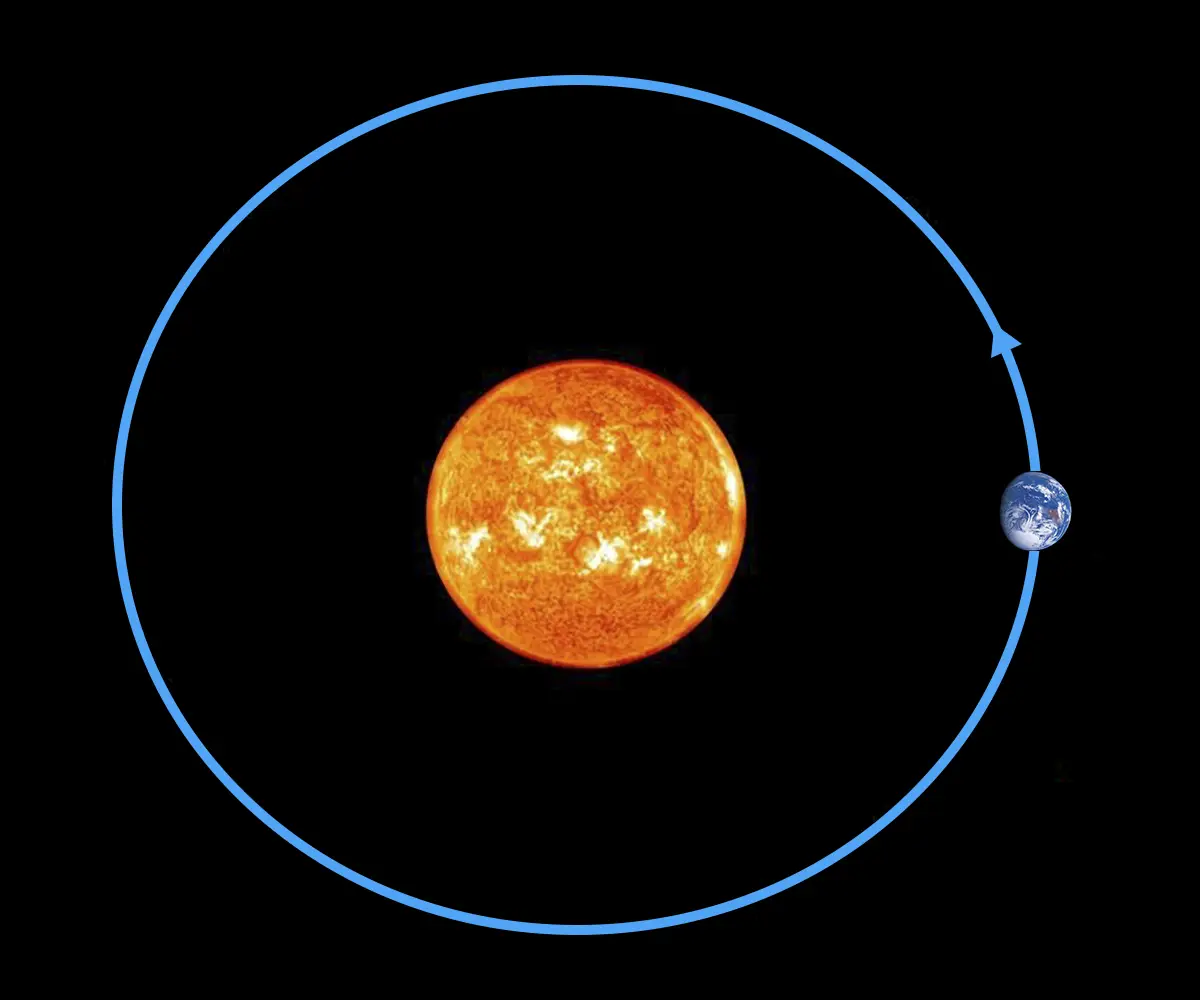 The second motion involves the Earth revolving around the Sun at an average distance of 149,600,000 kilometres or 92,960,000 miles. The Earth travels in an anticlockwise direction along a slightly elliptical orbit, completing one full circuit in 365.256 days and covering a total distance of 940 million kilometres or 584 million miles in that time. This orbital motion is continuous, producing the full sweep of seasonal change you experience across a year, as well as the apparent eastward movement of the Sun against the background of the constellations. Every planet in our Solar System orbits in the same anticlockwise direction, and the Sun itself rotates on its own axis in that same anticlockwise direction.
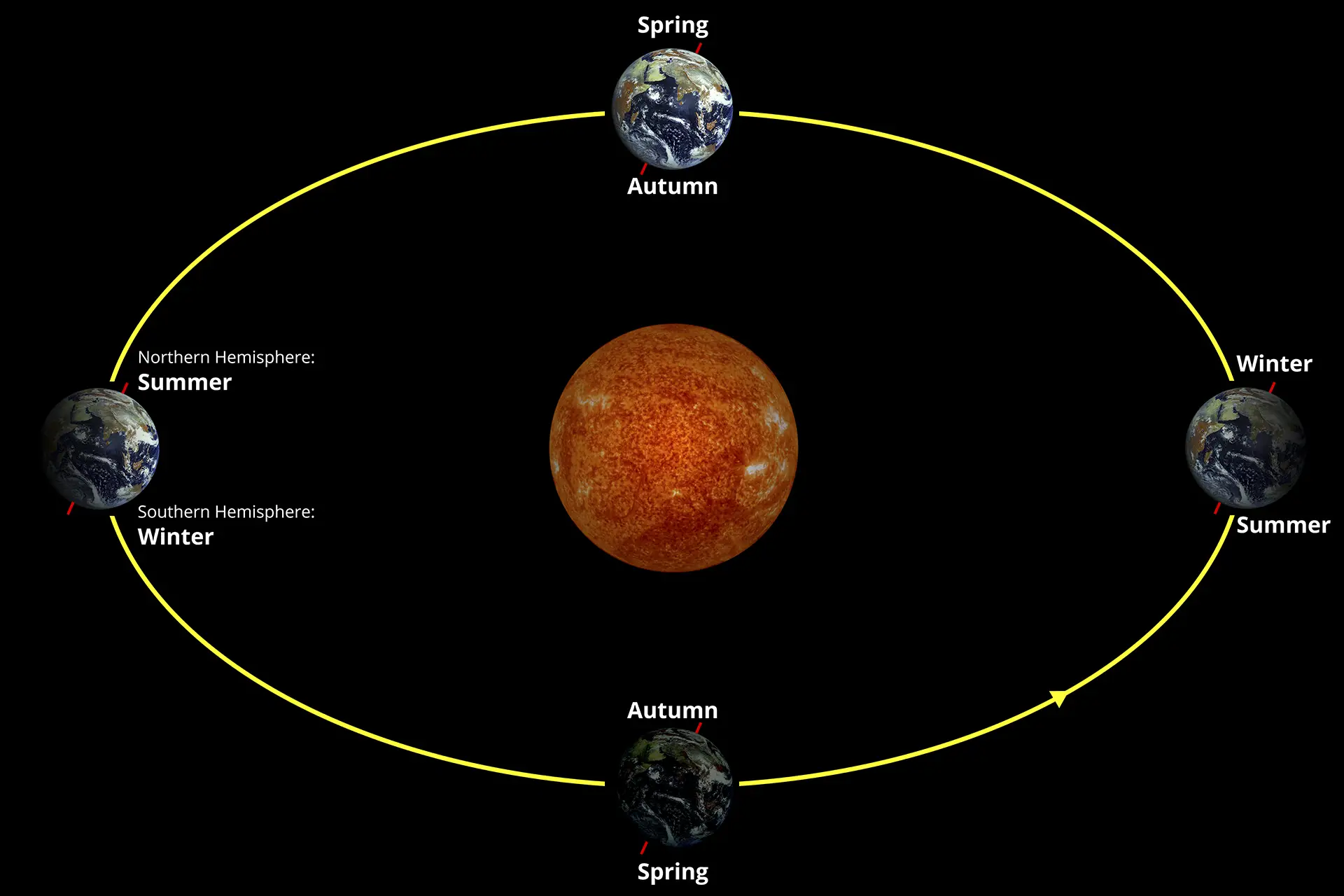 The Sun’s path across the sky, as observed from Earth’s surface, shifts throughout the year due to the inclination or axial tilt of our planet. For an observer in the southern hemisphere, when the south pole of our planet is angled towards the Sun, days are longer and the Sun appears higher in the sky overhead. More solar radiation reaches that region of the planet, producing warmer temperatures in summer. At the opposite time of year, when the South Pole tilts away from the Sun, conditions reverse and the southern hemisphere experiences its cooler winter months as it is tilted further away from the Sun.
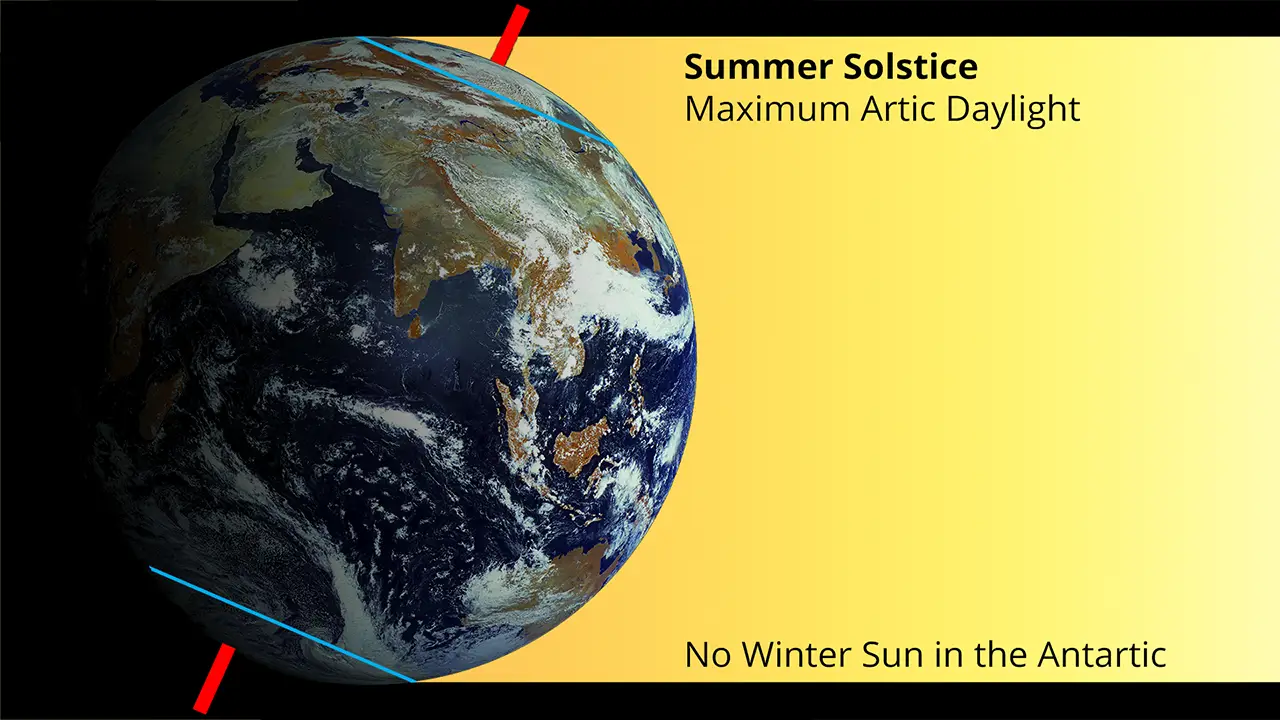 South of the Antarctic Circle and north of the Arctic Circle, two imaginary lines drawn 23.5 degrees from each pole mark a line of extremes. At and beyond these latitudes, there will be no daylight whatsoever for part of the year, the polar night, and constant daylight at the opposite time of year. This variation, produced by the combination of Earth’s orbit and axial tilt, is what gives us our seasons.
Our Sun appears to drift eastward relative to the stars over the course of a year. This drift is caused by Earth’s orbital motion around the Sun across those 365.256 days. The presence of the fractional day per year is precisely why we observe a leap year every four years, adding one extra day to the calendar to keep the Earth’s orbit and the Gregorian calendar aligned.
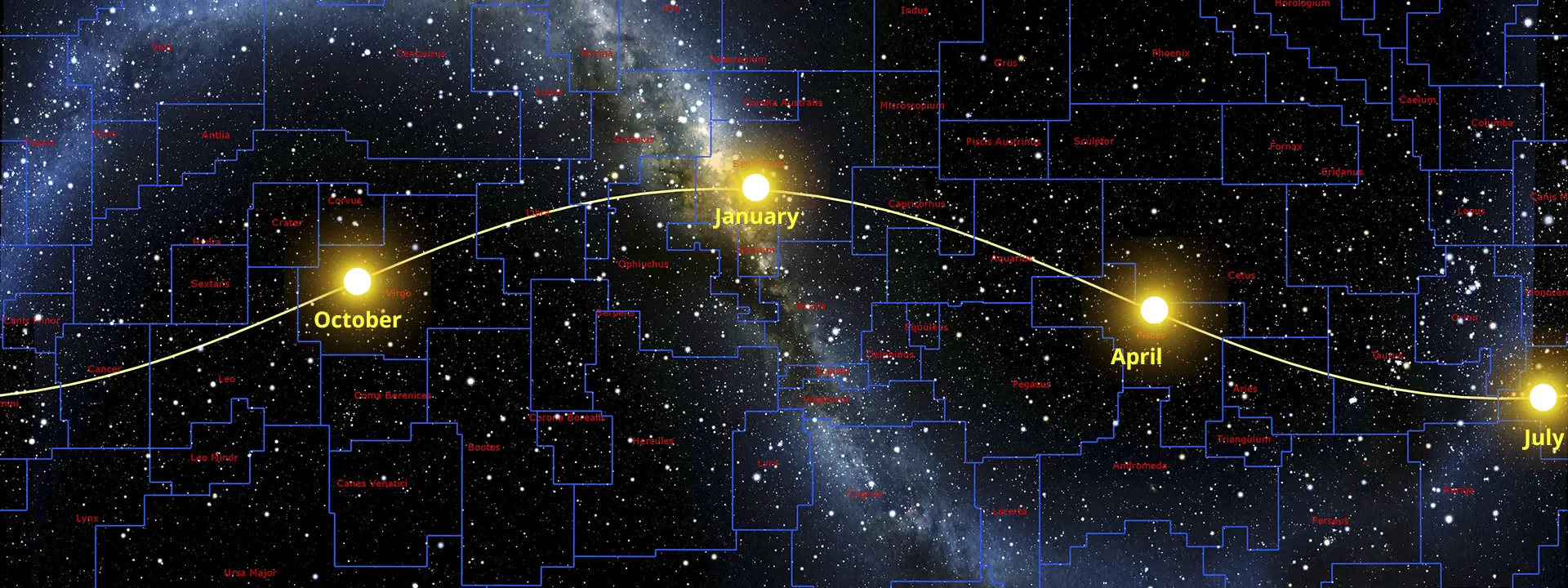 As previously noted, the apparent yearly path of the Sun through the stars and constellations is called the ecliptic. This path appears to oscillate up and down relative to the celestial equator due to the tilt of Earth relative to its orbital plane. It is always worth keeping clearly in mind the difference between the slow annual movement of the Sun along the ecliptic, and the fast daily rise and set of the Sun produced by the rotation of our planet.
Beyond the rotation of the Earth on its axis and its orbit around the Sun, there is a third motion. This is the long-term cyclic wobble in the orientation of Earth’s rotational axis, known as precession. The rate of wobble is extremely slow, taking 25,772 years for a full precession to complete. Nevertheless, it matters considerably to Astronomical Astrology, because over centuries this wobble shifts the apparent position of the Sun, Moon and planets against the backdrop of the stars, meaning the sky at the time of your birth looks measurably different from the sky mapped by ancient astronomers thousands of years ago. Understanding precession is what separates a scientifically grounded method of astrology from one working with a map of the sky that no longer reflects astronomical reality.
More information on True Astrology from The Life Force Institute
True Astrology - the True Astrology starter page.Astronomical Astrology - defining what is Astronomical Astrology.
A Scientific Approach - the science of Astronomical Astrology.
Precession of the Equinoxes - understanding the precession of the equinoxes.
Constellations Dimensions - the effect of the dimensions of the constellations.
Validation - how to validate Astronomical Astrology.
Encoded at Birth - how Astronomical Astrology is programmed within you.
Astrological Dates - a table of the astrological sign dates.
Search for other astrology topics on our site.
Further information
You can access our webshop for information available from The Life Force Institute. A blog is available to keep you updated with new information. Copyright © The Life Force Institute, all rights reserved.