Find Calmness in Between

Have you noticed how the harder you try to calm a chaotic mind, the more restless it can become? When actively trying to calm a busy mind backfire, focusing on the spaces between your thoughts offers a more effective path to relaxation and focus. These natural gaps, present even in the most chaotic minds, can provide you with an anchor for your attention. By observing and expanding these gaps, you create space for greater calm, allowing thoughts to naturally recede and leading to a more peaceful and centred state of being. Through this practice, you can find tranquillity amidst mental noise, leading to greater clarity, focus, and overall well-being.

Inner Stillness

Unplug from the mental chatter and discover the power of the space between your thoughts. Cultivating this inner stillness offers a direct path to greater calmness, clarity, and a more centred you. By prioritising these moments of quiet, you’re investing in your well-being, paving the way for a more authentic and truthful experience of yourself and the world around you. This practice isn’t just about mindfulness or meditation; it is about reclaiming your peace of mind and unlocking your true potential.

Struggling with meditation or mindfulness?

Many people struggle with mindfulness and meditation by trying to eliminate thoughts, but this very effort is a thought in itself. A more effective approach is to focus on the silence between thoughts. By observing these natural gaps and allowing them to expand, you create space for calm and facilitate a deeper meditative state. This powerful shift provides a fresh foundation for achieving improved meditation without the pressure of clearing your mind completely. This technique can be successful for many of us as it moves the focus away from the struggle with thoughts. As you focus on cultivating inner stillness, this naturally leads to a more peaceful mind and a more authentic and effective meditation or mindfulness practice.


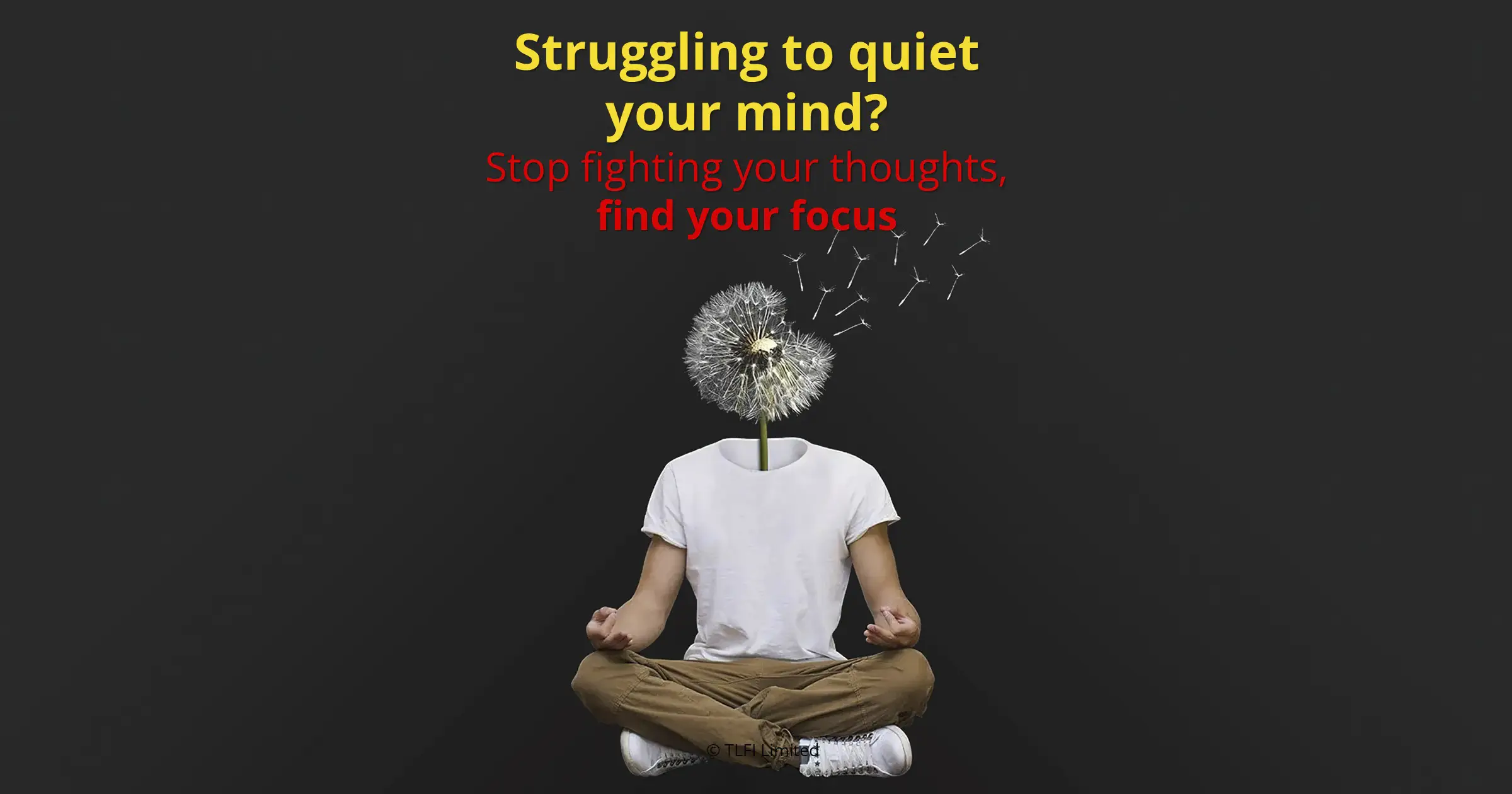
Stop fighting your thoughts – focus on the silence between them. Discover calm, clarity, and a peaceful mind with this simple mindfulness shift.

Silence the Noise: Stop Fighting Your Thoughts

One common struggle with mindfulness and meditation is the difficulty of clearing the mind. Ironically, trying too hard often causes more distractions with the very act of trying to create calmness, resulting in more mental clutter. Instead of attempting to eliminate thoughts, focusing on a single point of attention can help you create an initial foothold or beachhead of quiet. With practice, this quiet can be expanded, creating a peaceful space even amidst mental noise. This approach allows you to find calm and focus without the frustration of battling your thoughts, which leads to a more effective mindfulness practice and greater inner peace.

The Secret of Focused Thinking

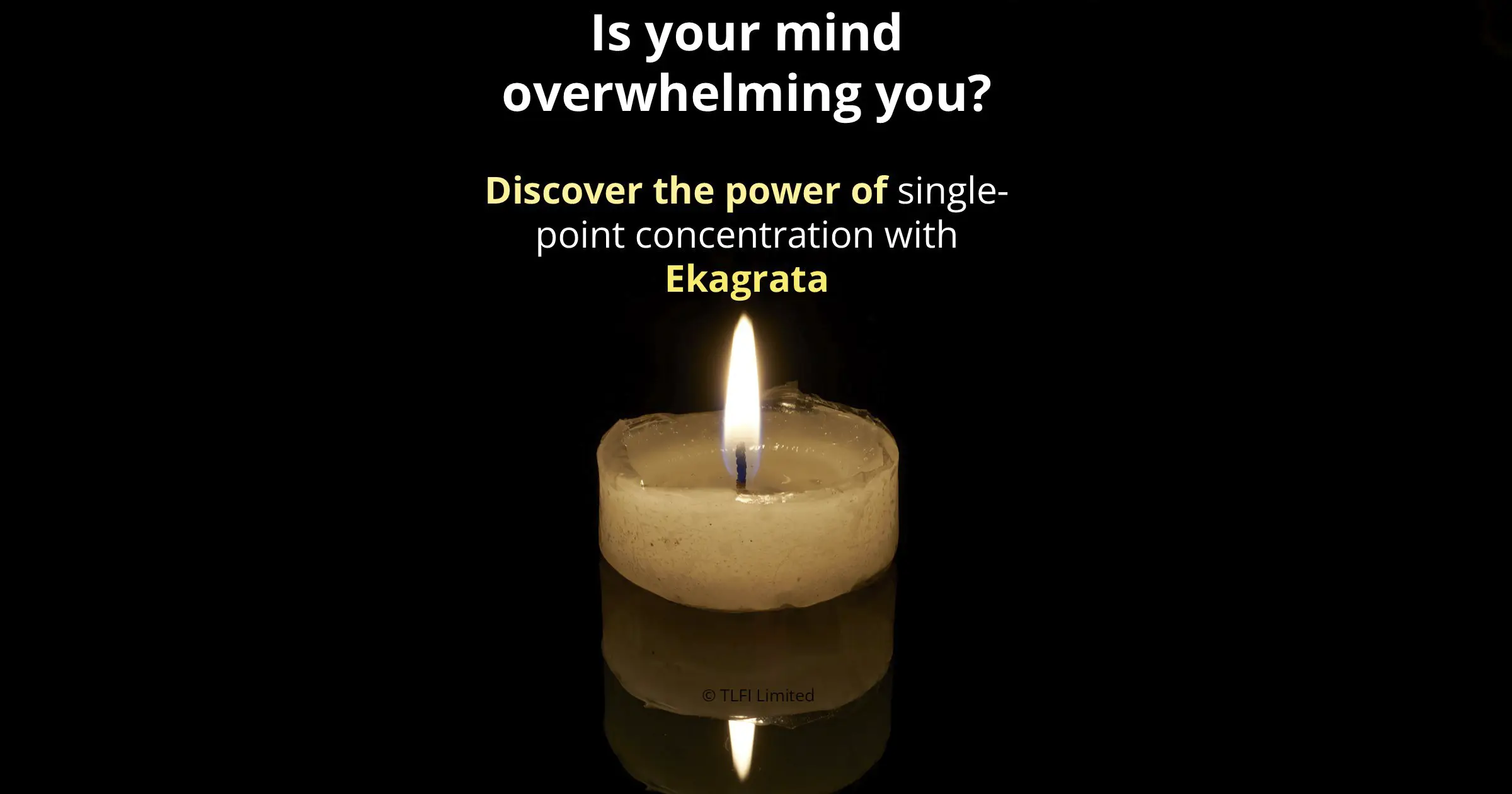
Struggling to calm your busy mind? You’re not alone. Many people find it challenging to quiet their minds during mindfulness or meditation, but trying to force a blank mind often backfires. Instead of forcing your mind to go blank, focus on mastering Ekagrata – the art of single one-pointedness of thought. Ekagrata involves directing your attention to your breath or a mantra, gently acknowledging stray thoughts without letting them take control. This practice trains your mind to attend to one thing at a time, preventing overwhelming thoughts. By practising intentional focus, you gain precision and control over your mind, leading to greater focus, clarity, and a more authentic and effective mindfulness or meditation practice.

Regain Control: Your Key to Emotional Strength

When strong emotions arise, pausing before reacting gives you the power to regain control and avoid being overwhelmed by reactive thoughts and sensations. This brief pause disrupts reactive patterns, allowing you to choose whether to engage with the emotion. By stepping back instead of engaging, you separate yourself from the emotion, choosing not to identify with the feeling. You create space freeing your mind to choose a better response, empowering you to navigate intense emotions with greater ease and maintain a sense of inner peace. What’s in it for you? More calm, clarity, and control in navigating life’s emotional challenges. Techniques like Life Force Cognition can enhance this control and further strengthen your ability to master your mind.

Troubles Clearing your Mind

A familiar challenge for lots of people, especially when aiming to accomplish mindfulness or meditation, is that they cannot clear their minds. Realise that your very efforts to clear or quieten the mind can often be the cause. Your mind becomes filled with the distractions of the very same ideas you are making an effort to eliminate. Focussing your mind on one thing, will help you to find that first beachhead of quietness. As you practice more, you will find that you can expand the quietness outwards to create a quiet space even within a noisy mind.

Your Undiscovered Light

Through an open, peaceful and quiet mind, the light of your Life Force can be awakened through Cognition. Your Life Force, the true self within all people, lays undiscovered behind the barriers of material emotions, feelings and ideas of your mind and persona.

The Space Between your Thoughts

Witnessing the space between your thoughts can be an effective means to help you calm your mind and achieve aspects of meditation.

It can be common to hear people ask “How can I clear my head when I meditate?” Often, the more you try, the more that your thoughts seem to arise. This can be entirely expected, as trying to clear your head is also a thought.

So do not try to get rid of your thoughts, as for most people, this will not work. Instead, you need a way to bring focus to the mind, through a process called Ekagrata. Even in a noisy or chaotic mind, there will be spaces between your thoughts. So instead of focusing on the thoughts which you are trying to push aside, apply your focus on the space or gap between the thoughts. All the while, as you continue to focus on the space between the thoughts, witness this space become larger, so that it fills more of your mind. Continue to focus on the space so that it pushes more and more of your thoughts to the side of your mind or your thinking. Gradually this quiet space will grow to provide you with an opportunity to have some calmness of mind, from which you can continue with your other mindfulness or meditation activities.

Change your Mental Wavelengths

Learn to change the wavelengths or frequency of your thoughts with Life Force Cognition. Life Force Cognition will enable you to quieten your mind by instilling a purpose of thought and a calmness within. Importantly this technique allows you to surpass various states of meditation, by providing a purpose to hold the thoughts of your mind in check.

Many people face challenges when undertaking meditation because their minds are not adequately tasked with a purpose. If the mind does not have a purpose, then it lacks focus and can drift; allowing it to continually bring forward thoughts, emotions and feelings from the passive intellect.  Take control through Active Intellect and Cognition.

Pure Attention

Pure attention is one of the highest forms of intellect. Often as humankind, we dive into the muddy water of emotional entanglements as we try to conquer or control things in our lives.  When instead, our best course of action would have been to pause, then become observant. As you try to understand something, it is usually best to set aside your preconceptions and observe it through the quietness of mind. This way, your observation will reveal what needs to be comprehended or understood.

Pure attention without judgment is not only the highest form of human intelligence, but also the expression of harmlessness. Take the time to observe through the quietness of mind.

My Mind will not become Blank

A common challenge for many people undertaking mindfulness or meditation is that they cannot make their mind go blank or empty, however much they try. You will be glad to know that most people have noisy minds, so you are not alone in your struggle to tame the endless chatter of your mind.

The ultimate goal for anyone meditating is to achieve a full quietness of mind, but for many of us, this is simply not attainable. If you have a noisy mind, stop trying to achieve absolute silence of mind. Realise that often your own efforts to quieten the mind, fill your mind with the noise of the very thoughts you are trying to banish. While you may not be able to achieve a complete quietness of mind, you should instead be focusing on becoming master of your mind. The difference being, that as you become that master, you can learn to focus your mind with Ekagrata (focussed thought).

Applying Ekagrata enables you to focus on one thing, such as your breath, or repeating a mantra, or mindfully shifting your attention to a specific thought. As a master of your own mind, you are not thinking of everything at the same time, you are being intentional and focusing on one thing at a time. If stray thoughts enter into your mind, you acknowledge them, and push them aside to achieve that focus of mind which is Ekagrata. Become the master of your own mind with Ekagrata, so that you may learn to create a quiet space even within a noisy mind with KIA0006 .

The Fundamentals of Vacuus and Sunya

This fundamental activity, introduces you to the concept of directives and the aspects of vacuus (emptiness) and sunya (a state of nothingness). When these aspects are combined with directives, they can assist you to achieve improved states of meditation.

Directives enable you to step beyond simply placing thoughts. Directives form the first and most important key necessary for progressing beyond the basic mindful thoughts. Through the application of directives, it is possible to achieve a new state of quietness of mind and body. In the activity KIA0006 Fundamental06 VacuusAndSunya, you then realise why directives and these aspects are important steps on the pathway to Cognition and illumination.

Applying Knowledge

Knowledge can open your mind to expand the understanding of yourself. Through such knowledge, you may gain an understanding of why you act and think the way you do.

Achieving a quietness within, will enable you to bring forward many aspects of knowledge for success, harmony and balance.