Time for Yourself

Many of us believe we achieve some downtimes for ourselves, however, the truth is often very different. Do you often find yourself caught up in the hustle and bustle of daily life, spending what should be your alone time worrying about others or responsibilities? Well, this is a common scenario with few of us actually experiencing any quality “me time”.

You can develop a simple and transformative practice of leaving a little space for yourself each day. It is simply learning how to reclaim a few precious moments exclusively for your well-being. While it sounds simple, the achievement of this is often difficult to achieve, especially in the busy and often chaotic lives we all live.

This is the art of doing nothing, for a few minutes each day. This isn’t a time for multitasking or engaging in activities. It’s a breather, a moment to sit still and just be. It is really about doing truly nothing. This is your time to disconnect from the world and reconnect with yourself.

Keep it pure and keep it simple. It is a time for you to just be, take a proverbial breather and try your best to empty your mind. To help you achieve this “me time”, you may find it beneficial to find a quiet corner of the garden or a room to sit. Just sit there quietly breathing, not thinking, not doing, not worrying, just being. You may struggle initially creating this time of pure nothingness, especially if you have an overactive mind or are prone to overthinking; but gradually with repeated application, you can achieve longer periods.

Creating this time for yourself each day is a small yet significant act of self-care. By dedicating just a few minutes to doing nothing, you can recharge, renew, and invigorate your mind and body. Embrace the simplicity of this practice, and witness the positive impact it can have on your overall well-being.

Embracing a New Outlook

If your efforts to alter a challenging circumstance have proven futile despite numerous attempts, perhaps it’s opportune to reconsider your perspective on the situation.

Embracing a new outlook might unveil alternative approaches, or reveal aspects that were previously overlooked, paving the way for a more effective and transformative response to the challenges at hand.

Are you Awake?

Being fully awake in a metaphysical context entails a heightened awareness of the ongoing processes within your field of consciousness. It involves a mindful recognition of the ebb and flow of thoughts and emotions, empowering you to navigate your mental landscape with clarity and responsiveness.

So instead of unquestioningly succumbing to the whims of your thoughts and emotions, remain vigilant and acknowledge the current state of your mind and emotions before they reach a tipping point, or the proverbial point of no return.

By staying attuned to the nuances of your inner world, you can foster a greater sense of self-awareness and follow through with conscious choices that align with your aspirations.

Overthinking Happiness

If you are a compulsive overthinker, you may be familiar with some of the following thoughts. Am I with the right person? Am I following my passions? Am I doing what I love? What is my purpose in life? Am I happy?

In many parts of the Western World, it seems as though one of these, the pursuit of happiness has become the ultimate overthinker or overachiever’s goal. Happiness from material life can outrank professional achievement and sometimes family and friendship. It can even minimise others’ achievements and takes the shine off our own.

Through the deluge of various social media memes, self-help books, guides, and even some meditations, there is a deep cultural aversion to negativity which is growing in society. This can be a welcome change, but the pressure to remain positive at all times often results in some complicated mental gymnastics. For example, renaming a report which lists strengths and weaknesses as strengths and emerging strengths or renaming problems as opportunities or challenges.

We all need to face the reality of life that every day is not always going to be perfect; we all have proverbial ups and downs. For most of us, each day will be filled with a proverbial sea of thoughts, emotions and feelings. How we learn to balance with this, is the real key in life. Learn to distil the positives from your life and enjoy those aspects which do bring real happiness. Then as you face true challenges or emotional dark spots, you can pull upon some of these past strengths and happiness. Most importantly, stop trying to overthink every aspect of life and that every moment must be sublime happiness, will bring you the freedom to be your real self.

What is Human Intellect and Intelligence?

Energy is the catalyst and creative force of the universe and life within it, which brings into existence atoms, particles, worlds, stars and galaxies. The human form is made of the very same substance and controlled by the same energies; yet is endowed with a mind to think, examine, reason and learn. However, few of us genuinely understand how our mind functions, let alone realise that what is generally regarded as the human mind is a construct of many different aspects. Broadly speaking, the human mind can be categorised into four main areas. First and foremost is what the majority of people consider the mind, it is your intellect or what is referred to as Buddhi in some old languages such as Sanskrit. Various other aspects of the human mind include your personality (Ahankara), your mental form or body (Manas) and the Spark of Life (Chitta) which connects to the basis of creation within you.

What is perceived as the human mind, is typically that of the brain. This is the component of intellect, the domain of thoughts and thinking, however, this is just a small part of the bigger picture. Our minds are undeniably a lot more than our intellect, as they consist of multiple interrelated parts which function as a whole. The complete intelligence of us as humans is distributed throughout our being. The knowledge and understanding of how to access or use these other components of our intelligence is rarely understood.

We unconsciously use some of these other dimensions of our mind all the time, yet few people are aware of the complex interactions and how our minds function. Consider that you do not know how to conduct your mind, your energies, your emotions or your body, and any effort to understand this could be beneficial for you to fully engage in life.

Your thoughts are energy, but they are just the beginning, as your thoughts interact with the various other facets of your minds. Through obtaining an understanding that you are far more than the intellect of your brain, you can begin to comprehend that there is a great deal more to making life happen. Take the time to pause and think with active intellect is an excellent starting point in life, and can lead you to the greatest discovery of the human minds.

Anchor Your Reactions

When you find yourself in the middle of a negative or unproductive reaction, perhaps you may have noticed how your breathing often becomes superficial and more rapid, and you may well feel unsettled in the stomach area, or a pulsing in your head. Sometimes your face might become flushed, or your chest area could start to tighten up as your emotions seem to start running out of control. After that, it can become like a slippery slope as thoughts can arise and emerge, which seem to make the matter even worse, and your emotions seem to go into overdrive.

There are many different techniques which can be leveraged to help you stop sliding deeper into this reactionary process. Simple breathing with conscious intent, can be a very effective means to stop this slide, anchoring your thoughts to one point. With yourself anchored, you have the opportunity to pause and choose to stop the continued reactionary process. The next time when you experience an adverse reaction to anything in life, do your utmost to apply some conscious breathing. By engaging your mind to bring focus to your breathing for a couple of moments, you can start to regulate your reactions. Then as you begin to take deeper and more rhythmical breaths, they can help you to find an anchor for your calmness. Allow this anchor to grab hold, and steady your emotions as you continue to breathe consciously.

Focus on What You can Change

Often in life, we become side-tracked by matters that annoy, upset or perturb us, which can lead to overthinking. When you start to overthink something, your mind can become overloaded and overwhelmed as associated thoughts and conditioned reactions are replayed over and over in your mind. The original thoughts have triggered conditioned thoughts, emotions, feelings and reactions. These aspects of overthinking can pull you down the path to additional worry, concern and sometimes stress.

At such time, if you were to stop or pause to carefully examine your life, you may discover that some of these matters are totally out of your control. You may realise there are some situations in life which you could not change in a proverbial million years. While we may recognise this in hindsight, many of us still attempt to change these apparently immutable aspects, which can lead to more anguish and upset emotions.

Rather than dwelling on what is beyond your control, you can choose to take a different path. Instead redirect your thinking to focus your intent on the things which you can change. As you begin to shift your focus, you will feel more in control of your life. Those aspects which you cannot control will usually lose some of their significance, or may completely fade away.

Stress is an Energy Overload

Identifying and managing stress can result in a more balanced and healthy life. All of us experience stress in different ways due to our own unique experiences and lives. Sometimes you may be able to immediately tell when you are feeling stressed, yet at other times you might keep going without recognising the signs. You might only comprehend just how much stress was present in a situation when it no longer exists. In these circumstances, it is typical that as soon as the reason for the stress has been removed, you may all of a sudden feel like a substantial burden has been lifted. Stress can impact you on many different levels, affecting the way you behave, think and feel.

The structure and function of the brain, our minds and the nervous system are vital to mental health. However, as humans, we are far more than our biology. There are countless schools of thought regarding the origins of stress. Each of us has different ways of handling stress. Some situations that motivate you, could generate the condition of stress in another person because of their personality and the emotions they hold within

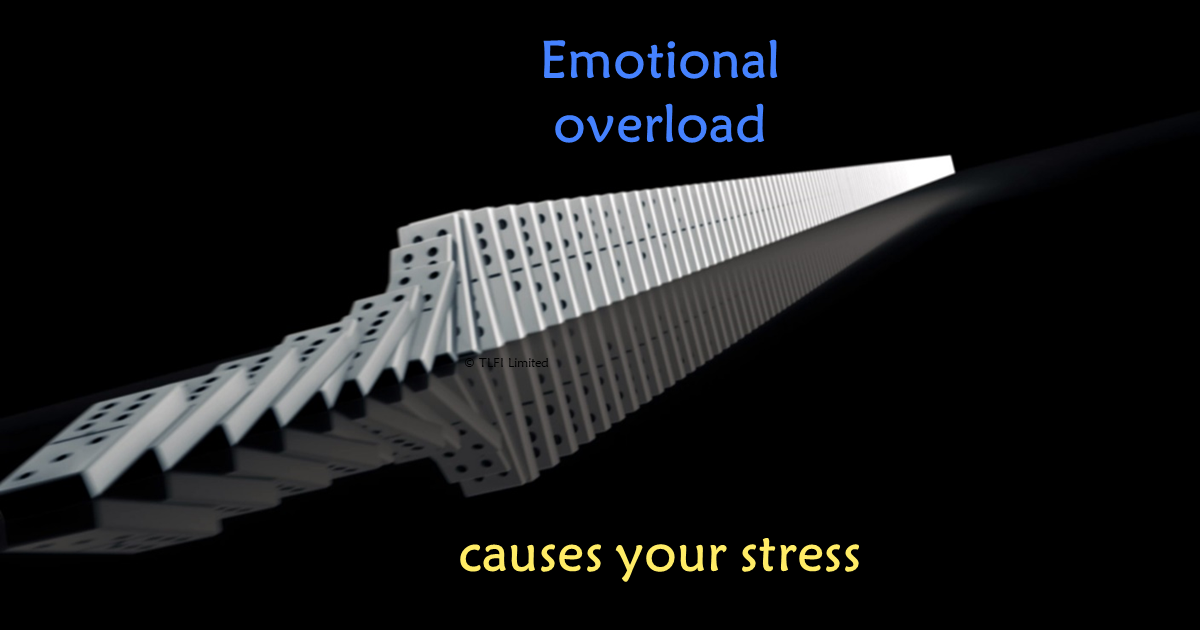
A brand-new approach to understanding stress is that stress is simply an accumulation of energy. As you experience life, your thoughts, actions and responses can result in a buildup of energy within various areas of the mind and body. If this buildup of energy is not suitably removed, the overload of emotionally charged energy will create issues for the human mechanism. This overload of emotionally charged energy will lead to what we recognise as stress.

The energies of your thoughts and emotions, especially when to the negative, can increase and flow through your nervous system. Stress intensifies this energy into the body, which then produces additional emotionally charged energies. If you are under lengthy periods of stress, these energies can increase even more. As these energies accumulate within the human mechanism causing damage like that of an electrical short circuit. It is not unusual to hear nowadays that individuals state they have become “burnt-out” as a result of stressful situations in their lives. It is the overload of these emotionally charged energies which causes damage and resulted in this burnt-out feeling.

While you should also bear in mind the more traditional elements of stress, this different view on the underlying mechanism of stress provides you with a new way to manage and control stress before it becomes a major problem in your life. When you begin to experience stress building up, find a means to release this build-up of these emotional energies for the wellbeing of yourself and others around you.

Some simple methods can be used to help you destress by draining away these emotional energy overloads. One effective method requires you to take several minutes out in meditation or mindfulness to see yourself near a lake or sea. Then while maintaining the image of the lake or sea, try to visualise this overload of emotional energy draining off into the water. Another equally effective technique is to stand on the ground as you perform your meditation, then envision the overload of emotional energies being drawn out of you into the earth. Alternatively, if you are practised in conscious breathing, then attempt to see the overload of emotional energies flowing out from you as dark clouds as you exhale each breath.

Reconnect with Mindfulness

Increasingly more of us have ceased noticing many aspects of the world within and around us, especially when we live very busy lives. It is something which may not be immediately obvious as we are so entrenched in our lives. With an ever-changing world, it has become significantly easier to lose touch with the sensations of life and living. As we do, some of us start to act totally via conditioned thinking, apparently reacting unconsciously to life.

You do not need to change who you are or modify your beliefs to become a lot more self-aware. All of us have the capacity to be mindful, to take notice of and be aware of the here and now. The trick is discovering that impetus to break free from the thoughts which your mind generates to keep you living life mindlessly. Active intelligence is the act of engaging in your thought processes beyond unconscious thought, utilising both good judgment and awareness to make real choices. In all of this, it is awareness which is the fundamental key to activating choice in life.

Through the awareness of yourself and your life, which can be achieved via techniques such as mindfulness, you can break those patterns of unconscious thoughts or pre-programmed reactions. At its heart and core, the whole focus of mindfulness is about awareness. Whether that be awareness of a sensation in your body or of some other external subject, the objective is the same. The objective is to focus your mind away from the everyday thoughts of your mind.

So if you find that you have actually stopped noticing the worlds around or within you, spend some time reconnecting with your real intentions with life force mindfulness.

What You Think You Become

How many times have you become aware of the expression “You become what you think” or variants on the same concept? Your thoughts are more than simply thoughts, they are what guide you through life and define you. They shape your perspective of the world and those around us. If you believe you can be successful, typically, you will achieve some form of success. However, if you believe you will fail, then more often than not you will face challenges and not succeed. This does not imply that you are prophetic, it just means that you generally believe and act out what rattles around inside your head.

Your mind is a powerful tool when used correctly, but it can also be your own worst enemy. You may not know it, but for most people, your mind can play tricks on you. If you think you cannot do something, at that point you have set yourself up for failure. Before you have even begun you are questioning whether you will be successful, it is a formula for calamity.

Buddha stated, “The mind is everything. What you think, you become“. As you probably have picked up from the above paragraphs, there is an honest truth in this statement. It then follows that if you can control your mind, you can help to direct and guide the direction of your life. We live what we think about constantly. These thoughts might be intangible, however, their power lies in the way they affect and influence us. For every thought or action, there is a reaction or effect. This correlates to the observations made by Newton when he detailed his third law of motion. Realise that your thoughts and reactions all have effects and consequences. There is always an effect even if you do not witness the result. Your thoughts and reactions in life can result in an accumulation of emotionally charged energies within you. These energies can have damaging or detrimental effects on your body, sometimes bringing about illness.

We have the capacity to choose how we feel and to dictate how we will live our lives. That is why our thoughts are so significant, due to the fact that they determine virtually every element of our lives. You can either be shackled by your thoughts or set free by them. If you want to transform your thought process and improve your quality of life – you must take action. So begin to take control of your thinking and reactions to make sure that you only build beneficial energies of thought.

Discover the Skill of Focused Thoughts

When focused with intent, your thoughts can be significantly more powerful, akin to light being concentrated by a magnifying glass. If, however, your thoughts lack focus, they may resemble light being transmitted through a prism or even being diffracted through the water. While light can be transited through a magnifying glass, a prism or a glass of water what happens to the light on the other side is very different. When the light passed through the magnifying glass, the multiple waves and particles of light are focused with greater intensity. Conversely, light transiting through the prism can be split up and separated, effectively reducing the overall intensity. Similarly, light traversing a glass of water can be distorted and scattered by the intervening components so that the light may no long bears recognisable as the original form.

These examples of light passing through various substances are comparable to your own thoughts. You can discover the skill of focusing your thoughts through the technique of Ekagrata rather than allowing your thoughts to become dispersed or scattered like the light in the previously mentioned example of the prism and glass of water.

The ability to be able to truly focus your mind is a key aspect of any practice relating to mindfulness or indeed any aspect of your life. The basic principle of Ekagrata is simply that of focusing your thoughts without concentration and maintaining that focus without allowing your mind or thoughts to drift off to other things. The same principle of focusing your thoughts is also important for those who wish to succeed in their practices of meditation or other more advanced techniques such as Cognition.

While many may talk of focusing your thoughts, it is important to comprehend that there is a subtle but important difference between focused thought (Ekagrata) and concentration. While concentration can seem similar to focusing, it often contains emotional aspects which can distort the thoughts resulting in an overall unsatisfactory result. So take the opportunity to discover how to focus your thoughts without concentration as this can help you in so many ways.

Is your Mind Making your Life Hectic?

When your life seems to be rushing by and everything around you seems to be happing too fast or out of your control, make the effort to stop for a moment. At that instant in time, with the world on pause, ask yourself, is it the world that is busy and hectic, or is it my mind? You might actually discover that the fact is, that your mind is overfilling your life with innumerable and quite often unwanted and frequently groundless thoughts or other contrivances. With some of these thoughts paused, you now have the opportunity to reestablish control of your mind to make your life truly less hectic.

A New Slant on Stress

Each of us have some form of stress which impacts on our lives. Appropriately recognising and dealing with it can lead to a more balanced and healthy life. There are many schools of thought as to the root cause of stress. However, a new way to look at stress, is that stress is purely a build-up of energy. As you experience life, your own thoughts and reactions can lead to an accumulation of energy within different areas of the mind and body. If this build-up of energy is not appropriately dissipated, the overload of emotional energy will cause issues for the human mechanism.

While we can still consider the traditional aspects of stress, this new slant on stress provides you with an opportunity. When you start to feel stressed, find a way to release the build-up of emotional energy so that it does not hurt you or others around you.

Some simple techniques can be utilised to help you destress by draining away these overloads of energy. One simple method can entail taking a few minutes out in meditation or mindfulness to seeing yourself near a lake or ocean, seeing the emotional energy draining away into the water. Another similar method is to stand on the earth, then think of the emotional energy being drawn away into the ground. Alternatively, if you are practised in breath works, then you can see these excess energies flowing out as dark clouds when you exhale.

Focus on Change

Many times in life, we are distracted by things that upset us, cause worry or tension. If you were to closely examine your life, you would find many aspects appear to be out of your control. However, many people continue to try to change these seemingly immovable things in life.


To bring about some true and meaningful change, focus your intentions on the things in life which you can change, rather than dwelling on what apparently is out of your control.

Be Aware of your Choices

No matter what is going on in your life, you can still choose to be aware and mindful. It is all about choices – you have the power within you to choose how to respond, rather than reacting. The power is within your grasp; pausing your mind provides the opportunity for silences and active intellect to take charge. You can then make informed decisions on how to react to any situation in your life.