Sorry can be the Hardest Word

Do not be afraid to be the one to say sorry after an argument or disagreement, even if you think you are in the right. Being sorry is not about taking a proverbial side, winning or losing. It is an exploration into the realm of friendships and relationships which underscores the transformative power of humility, gratitude, and the acceptance that compromise should be seen as a cornerstone of harmonious connections.

In the heat of disagreements, the ego often stands tall, fuelling the belief that admitting fault or offering an apology is a sign of weakness. However, the opposite holds true. Apologising requires a deep well of strength and self-awareness, an acknowledgement that relationships are nuanced, and the pursuit of being right at the expense of connection is a hollow victory. Learning to say sorry becomes a bridge that spans the chasm created by disagreements, fostering understanding, and fortifying the foundation of trust.

The essence of compromise is a hard lesson to grasp, especially in a world that increasingly fosters individuality and the pursuit of personal desires. Yet, as you navigate the complex web of relationships, both personal and professional, hopefully, you may realise that compromise is not a surrender or loss. It is an acknowledgement that more often than not, we need to work together in life to achieve mutual understanding and shared happiness.

Gratitude becomes the natural offspring of the willingness to apologise and compromise. When you embrace the humility required to say sorry, it can help you to better appreciate the friendships and relationships around you. Gratitude allows you to shift the focus from what is lacking or perceived to be lost, to what is present or achieved. In the act of saying sorry, you can not only mend interpersonal bridges, but also cultivate a grateful heart that sees the richness of what already exists.

Realise that simply saying sorry can make such a difference, whether it is to defuse a situation or to make things right. So take the time to contemplate that being sorry is not so difficult to achieve.
Take a Deep Breath

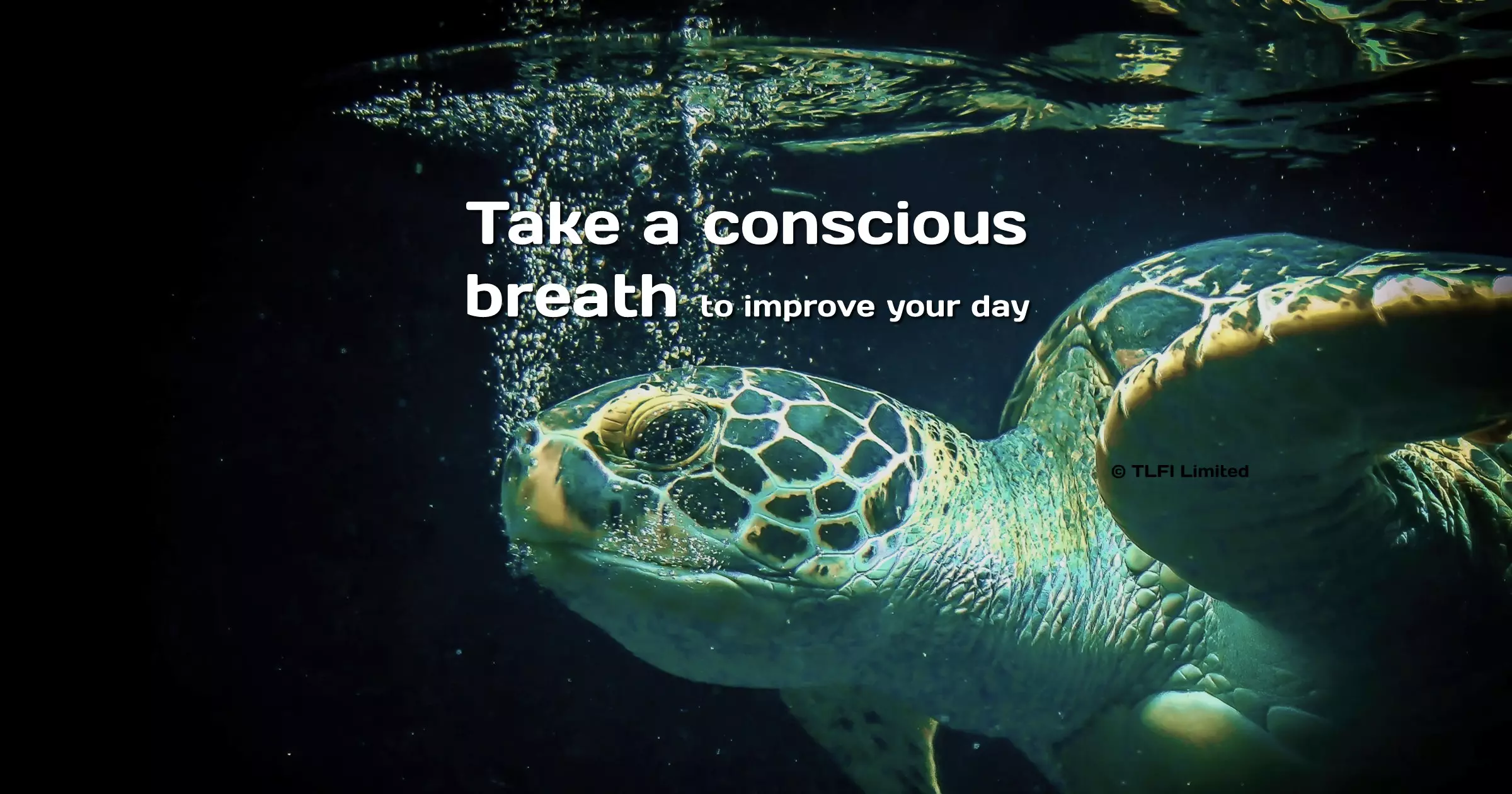
Sometimes in life, it can be important to stop to take a breath. Throughout your life, you constantly breathe, but much of this activity is controlled by the autonomic nervous system of the physical body and goes on unnoticed. The act of taking a breath is a conscious decision to step in and control your breathing. This can be extended to observe all sensations around your breath.

So how can consciously taking a breath be so helpful? Well, the first and most important aspect is that it provides a focus for your mind. If you have been having trouble with erratic thoughts or rampant emotions, focusing your mind in this way can be a simple but effective means to create a pause. When you have paused the mind and given it an alternative focus, you have the opportunity to step in and break the pattern of thoughts or emotions which are impacting your life, then make a conscious choice rather than continuing to react with the passive intellect.

You will also find that if you take a deep and purposeful breath, the act of your deep breathing activates your parasympathetic nervous system. This contrasts with the sympathetic nervous system’s activation, associated with the fight-or-flight response. By consciously engaging with deep breathing, you can access a powerful tool for self-regulation, steering away from the stress-inducing patterns of the modern world.

When approached with intention and mindfulness, your breathing becomes a means to achieve relaxation, infusing the mind with a calm clarity that is conducive to optimal cognitive function. Your brain is a large consumer of oxygen within your body – on the physical level it is then clear to see how conscious breathing opens channels for increased oxygen intake, leading to improved mental clarity.

Conscious breathing extends beyond the cognitive realm, reaching into the emotional and psychological domains. It becomes a tool for breaking free from the ruminations of the passive intellect, offering a pathway to emotional balance and mental resilience. Stopping to consciously take a breath. can be extremely beneficial for your well-being.

Escaping Emotional Jail

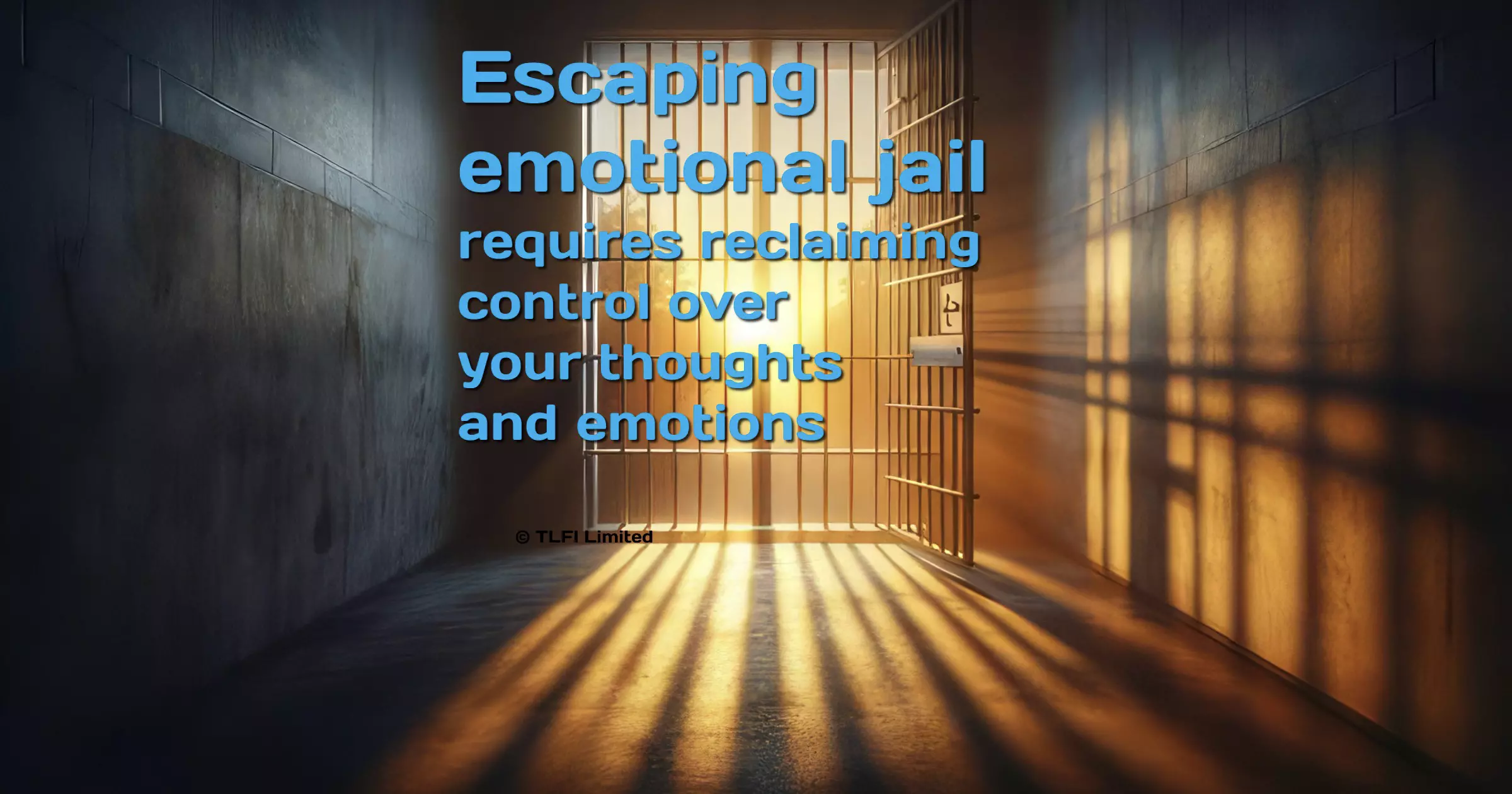
Emotional Jail is a powerful metaphor that encapsulates an entrapment which you may experience, due to the web of self-limiting thoughts and emotions manifesting when you get into a so-called emotional state. When you get deeply emotional, it becomes hard to recognise the barriers built by the passive intellect of the mind. In the throes of an emotional state, the passive intellect orchestrates a relentless parade of self-limiting thoughts and corresponding emotions, constructing an intricate tapestry of limitations and excuses. These thought patterns become the bars of your emotional jail, restricting your ability to think clearly. This metaphorical emotional prison is not only a construct of your mind, but also an energetic state that takes its toll on your mental, physical, and emotional well-being.

Escaping your emotional jail is about how you can learn transformative techniques to break the chain of emotional cause and effect. Thereby giving you an opportunity to break free from this emotional quagmire of your own construction.

The journey to escape the emotional jail is an inner odyssey, requiring commitment to mindful awareness and bringing forward cognitive mastery. As you cultivate these skills, they can help you to become aware of the thoughts and emotions which have formed the prison bars and walls. Being aware is the first step to being able to dismantle the walls of self-imposed limitations, creating an opening for renewed mental and emotional freedom. Escaping your emotional jail, requires reclaiming control over your thoughts and emotions, unlocking the potential for a more liberated, empowered, and balanced existence.

Entering into a state of cognition is an extremely useful key to unlocking your emotional jail. This is not a passive quietening of your mind, but a deliberate and focused effort to silence the cacophony of the thoughts. Cognition involves a dedicated purpose of thought, a specific conscious redirection of mental energy toward constructive, empowering, and liberating perspectives. By quietening the mind with intention, you can create a space for clarity, and the dissolution of the emotional jail’s energetic grip.

Procrastination Affects Your Happiness

Procrastination, often dismissed as a harmless delay, conceals a significant impact on your well-being and can affect your pursuit of happiness. On the surface, procrastination, or delaying things may seem innocent. However, the crux of the matter is that procrastination, rather than just getting on with things, can often lead to a hidden accumulation of energy, which in some cases can result in increased stress.

It is not uncommon to be faced with tasks which you may deem undesirable. In these situations, the mind naturally gravitates towards avoidance. This avoidance perpetuates delays and adds to the underlying emotional causality. The looming sense of “I don’t want to do this” can very quickly build to be a burden, amplifying the stress associated with the task at hand. This thinking pattern then creates a feedback loop, which not only delays the completion of necessary responsibilities but affects your emotional well-being.

Addressing procrastination requires a proactive approach. By confronting the task head-on, you can liberate yourself from the grip of avoidance, unravelling the knots of stress that hinder your path to happiness. Tackling necessary tasks, not only frees up mental space, but also creates a sense of accomplishment. The release from procrastination allows for a redirection of energy toward more enjoyable aspects of life, fostering a positive cycle where the pursuit of happiness becomes an achievable endeavour.

How Negative Thoughts Affect You

Delving into the intricacies of the human psyche, it becomes evident that negative thoughts or thinking have an impact which extends beyond thoughts themselves. To better comprehend the impact of your thinking, you need to consider the profound connection between your thought patterns, emotions, and the energetic fabric of your being. This may lead you to the realisation that your mind is not only a generator of thoughts, but a sculptor of the energetic landscape that shapes our overall well-being.

Negative thoughts act like dense clouds, casting deep and long shadows over the mental landscape. If your mind fixates on these destructive aspects, it unwittingly fuels their energetic existence. The energy generated by persistent fear, worry, and destructive emotions can coalesce into a formidable barrier; an energetic interference, akin to static, disrupting the natural flow of the human mechanism.

This energetic disturbance, when left unchecked, becomes a major contributor to both physical ailments and mental imbalances; echoing the profound connection between the mind and the body.

Understanding the energetic consequences of negative thoughts becomes a pivotal point in the pursuit of your well-being. The realisation that your mental states are interlinked with the physical and energetic dimensions of your being can inspire a shift in perspective. By cultivating this awareness, you can redirect the energy of destructive thoughts, or transform their nature through methodologies such as emotional alchemy.

This basic understanding of how negative thoughts can affect you, gives the insight to break the cycle of negative thought patterns, promoting mental clarity and emotional resilience.

Your World in Your Mind

The perception of the world around you is greatly influenced by the state of your mind as you experience the world through your mind. These perceptions are not mere reflections of the outside world, but are powerful filters on life. The lens through which you view the world is shaped by the state of your own consciousness.

This symbiotic relationship between internal states and external experiences highlights the pivotal role of perception in shaping our interpretation of reality. This important fact acknowledges that your inner landscape, teeming with thoughts, emotions, and feelings acts as the master painter, imparting hues and tones to the canvas of your reality.

Once you become more aware that your mind colours your perceptions of the world around you, you can begin to appreciate how these perceptions can be altered. If your mind is clouded with negative or despondent thoughts, the world may be manifest in a gloomy hue. Conversely, when your mind is filled with happiness, the world will take on a similar positive outlook.

By understanding the profound impact your mind can have in your life, you can take the opportunity to alter or recolour your perceptions. You are capable of changing the ordinary into the extraordinary and shaping a world that resonates with the vibrancy of your innermost thoughts and emotions.

Are you Awake?

Being fully awake in a metaphysical context entails a heightened awareness of the ongoing processes within your field of consciousness. It involves a mindful recognition of the ebb and flow of thoughts and emotions, empowering you to navigate your mental landscape with clarity and responsiveness.

So instead of unquestioningly succumbing to the whims of your thoughts and emotions, remain vigilant and acknowledge the current state of your mind and emotions before they reach a tipping point, or the proverbial point of no return.

By staying attuned to the nuances of your inner world, you can foster a greater sense of self-awareness and follow through with conscious choices that align with your aspirations.

Everyday Happiness

Life is predominantly composed of ordinary moments, far outnumbering the extraordinary ones. Whether you are patiently queuing at the supermarket, enduring the daily commute to work, or tending to routine tasks such as feeding pets or doing the washing, the ordinary hours make up the fabric of your existence.

The essence of true happiness lies in the ability to discover moments of joy and fulfilment within the seemingly mundane routines of daily life. Real happiness is about finding beauty in the simplicity of everyday life, appreciating the small pleasures that weave through the tapestry of ordinary hours.

It can be as simple as witnessing the magic of how sunlight bounces off the corner of a sugar crystal left on the side of your coffee cup in the morning. Then through being open to the experience you have noticed how the sunlight reflected through that sugar crystal is scattered in a rainbow of colours onto an otherwise plain wall. Then recognise that happiness, joy, wonder or contentment can flourish in the most unassuming moments.

Learning Through Life’s Experiences

Life can often teach us all valuable lessons through our experiences, and often more significantly through what we would term mistakes. When you make mistakes, it is imperative not to berate yourself. Instead look at this as an opportunity to reflect on what proverbially went wrong, then learn from your experiences. Even better yet, apply this learning to make changes to your thinking, behaviour or decisions going forward.

Making mistakes or odd slip-ups is a natural part of the learning process and can help us to develop resilience, perseverance, and a greater sense of self-awareness. When you have made a mistake, you should take the opportunity to honestly look at what happened, rather than trying to blame someone else or the situation. In doing so, you force yourself to examine your weaknesses and limitations which leads to the problem. That is the source of learning which can then be applied forward in your life.

It’s important to bear in mind that learning from your mistakes, blunders, missteps or even faux pas calls for readiness, to be honest with yourselves, take responsibility for your actions, and make a real effort to learn from your experiences. It is additionally important to exercise self-compassion and forgiveness. You do not want to proverbially beat yourself up about a past blunder or error which after all is now in the past and cannot be changed. Try to limit the time you spend examining the past, because if you dwell too long on these past incidents you may find yourself being dragged back down to the level of the problem and situation, which could be damaging to your overall mental well-being.

Take the opportunity to examine and learn from your mistakes. You do not need to live them over and over again in your mind. Then accept and embrace the learnings which have been gained from the past, to provide an effective means to grow and develop as an individual.

Your Astrological Key Codes

Your astrological key code is encoded within you at the time of your birth due to the ambient solar system energies. This astrological key code is similar to the programming within an app on your smartphone or computer program. It helps to define your standard pre-programmed ways of thinking and reactions to life.

At the time of your birth, the energies of the constellation behind the Sun (your Sun sign) will be amplified to create astrological programming within you. This precast programming contains a blueprint of the emotional reactions you will have, the type of thought patterns you resonate with, as well as the strengths and weaknesses of your body. The personality traits and aspects of your birth constellation will form an underlying basis for how you think and the flow of emotions in your life. It is because of this astrological key code, that you will react more strongly to different people and situations in your life.

When the ambient energies of the Solar System or constellations resonate more strongly with your astrological key code, then it is likely you will react or respond with greater intensity. So now, you may begin to appreciate how different people can absorb, process and respond to the same situations in life in completely different ways, as their astrological key code colours their life and reactions.

Once you realise how you react and express thoughts and emotions is pre-programmed, you can more easily adapt to situations in life.

Influencer for Life

Increasingly all of our lives are being affected by the cult of social media and celebrity. You can become your own influencer, an influencer of your life, for life.

While you may see the snippets of other people’s lives around you, do not allow those illusions of the perfect body, dream lifestyles, fantasy homes or other seemingly enviable aspects to dominate your thinking. Steadily more and more of us are becoming unhappy, disillusioned or even worse, as we compare our lives to the world of others.

Take the opportunity to look at your own life; realise and recognise all that you have achieved. In this way, you become your own influencer, a unique influencer. It can start with a very simple concept such as “I am enough”, or “I have achieved”. Establishing this self-influencer mindset will give you a newfound sense of happiness and contentment, allowing you to continue to influence your life for the better. Make the effort to create a mantra, which you repeat every morning or even throughout the day until it sinks in and your mind accepts it. As you allow this positive aspect to build within your life, you will begin to discover that many things are your own source of happiness. You will quickly realise that “I am enough, I have enough, I have always been enough and I always will be enough” can be very powerful tools as an influencer of your own life and destiny.

Overthinking Happiness

If you are a compulsive overthinker, you may be familiar with some of the following thoughts. Am I with the right person? Am I following my passions? Am I doing what I love? What is my purpose in life? Am I happy?

In many parts of the Western World, it seems as though one of these, the pursuit of happiness has become the ultimate overthinker or overachiever’s goal. Happiness from material life can outrank professional achievement and sometimes family and friendship. It can even minimise others’ achievements and takes the shine off our own.

Through the deluge of various social media memes, self-help books, guides, and even some meditations, there is a deep cultural aversion to negativity which is growing in society. This can be a welcome change, but the pressure to remain positive at all times often results in some complicated mental gymnastics. For example, renaming a report which lists strengths and weaknesses as strengths and emerging strengths or renaming problems as opportunities or challenges.

We all need to face the reality of life that every day is not always going to be perfect; we all have proverbial ups and downs. For most of us, each day will be filled with a proverbial sea of thoughts, emotions and feelings. How we learn to balance with this, is the real key in life. Learn to distil the positives from your life and enjoy those aspects which do bring real happiness. Then as you face true challenges or emotional dark spots, you can pull upon some of these past strengths and happiness. Most importantly, stop trying to overthink every aspect of life and that every moment must be sublime happiness, will bring you the freedom to be your real self.

Unblocking Prana or Chi

Did you know that there is a powerful, unseen energy within you that circulates to maintain every cell and organ in your body? This energy is the Universal Force which surrounds and permeates you, binding the universe together. This energy is also essential to your general health, vitality, and well-being. This energy of life is known by many names such as Prana, Chi (Qi) and the Force in numerous cultures. This is the primordial, all-encompassing energy of the Force, which pervades not only you but every person & everything.

An essential aspect of your wellbeing is the unobstructed flow of this Chi or Prana energy throughout the human form. This energy of the Universal Force circulates naturally through the body along energy pathways or channels, as part of the human energy mechanism. The term meridians characterise the energy distribution system as represented in Chinese medicine, and details how the basic substances of life permeate the entire body. When this energy becomes constricted or blocked that can lead to problems. When the flow of Prana or Chi is disrupted, this can produce various types of sickness or illness.

What is the key to ensuring that your Chi energy flows freely and normally? There are many popular techniques, with Qigong, Tai Chi, and Reiki topping the list, along with several types of frequency-based meditations professing success. However, the one element that all these techniques share in common is some form of meditation is an integral component. Though you should be aware that some of these practices may introduce their own problems as the practitioner may not fully comprehend the human <a href=”/wellbeing/the-energy-mechanism/” target=”_blank”>energy mechanism</a> and the potential side-effects of their practice.

Practised for many thousands of years, meditation is seen as the principal means of clearing and balancing any kind of imbalance along the network of meridians to restore the correct flow of Prana or Chi. However, what is not known by the majority of experts or practitioners is that it is their own thoughts and emotions which have caused various restrictions or blockages in the flow of the Universal Force. This is why performing meditation with the purpose of awareness to understand your true nature is very essential to your ongoing health and wellness.

Resonating at a Higher State

Negativity in the form of thoughts, emotions and opinions is something which exists in life. This is the actuality of the world in which we live. The skill is working out how to handle such negativity when you encounter it, as you will inevitably do.

While there can be lots of notional techniques for taking care of negativity, the easiest and most effective way is to resonate above it. If all of your mind is functioning at a higher frequency level, then the discord which can be created by negativity is much less likely to affect you. It is only when you are thinking similar thoughts, that like draws in like and your own thoughts become pulled to the negative thoughts, situations or activities happening in life. So continually strive to maintain your thoughts and emotions at a higher state of being, to ensure that you are resonating above negativity.

Staying Awake in Meditation

It can be common for people to struggle to remain awake on occasions during meditation due to three separate factors (see later on). Regardless of the explanations for having this propensity to doze off, the key resides in applying your awareness. Becoming aware is a core competency to be acquired through meditation, so, intriguingly, being aware is the key to not zoning out during your meditation activities.

The most common reason for people having a tendency to doze off during meditation is unsurprising a result of their hectic or frantic lives. If you have had a busy day or have struggled with stress, then you might identify that you often become drowsy during your meditation. This is simply because your body begins to destress from the pressures of your life as you perform the meditation activity. If you regularly experience this, then take time out to stand or splash some water on your face before proceeding. During the afternoon, lots of people experience an energy slump which can affect them when meditating. If that is the case, then it could be more beneficial for you to practice meditation in the morning when the body is awake. It is also common that a relaxed posture can contribute to the impulse to nod off, so take the opportunity to get started with some improved posture before you start your meditation. It does not mean that you need to sit in a contorted position, just becoming more aware of your body is the key.

A much more bewildering reason why you may become sleepy during your meditation is that your mind is proactively functioning to control your life. This might sound like a dichotomy that falling asleep is because of the activity of your mind. Yet it is effectively your mind which is applying control over you, hindering your ability to successfully practice meditation. In this way you might feel as though you are not succeeding, and that you cannot meditate. When the fact is, your mind is compelling you to be this way to ensure that it can preserve control. If you continue to meditate, you can strive to take back control from your mind, nevertheless be aware that your mind is most likely to strongly resist giving up control at any cost.

The final aspect which is seldom taken into consideration is that through the process of learning to meditate, you can awaken some of the inner energy of your true self. As the energy of your Life Force flows into your body, this can initially lead to a sensation of tiredness or even phasing out. This is simply because your body and mind are not accustomed to these kinds of energy apart from the minuscule quantities which are necessary to keep the human mechanism alive. If you are experiencing zoning out, then the key once more is the application of awareness. Being aware, as mentioned previously, is a cornerstone of meditation and it is never truer than when your Life Force energies begin to come to the fore via advanced meditation. As you apply your awareness, know these energies flow through the energy pathways (meridians) of your body. This knowing, through your awareness, will assist you to maintain your focus and not zone off.