Influencer for Life

Increasingly all of our lives are being affected by the cult of social media and celebrity. You can become your own influencer, an influencer of your life, for life.

While you may see the snippets of other people’s lives around you, do not allow those illusions of the perfect body, dream lifestyles, fantasy homes or other seemingly enviable aspects to dominate your thinking. Steadily more and more of us are becoming unhappy, disillusioned or even worse, as we compare our lives to the world of others.

Take the opportunity to look at your own life; realise and recognise all that you have achieved. In this way, you become your own influencer, a unique influencer. It can start with a very simple concept such as “I am enough”, or “I have achieved”. Establishing this self-influencer mindset will give you a newfound sense of happiness and contentment, allowing you to continue to influence your life for the better. Make the effort to create a mantra, which you repeat every morning or even throughout the day until it sinks in and your mind accepts it. As you allow this positive aspect to build within your life, you will begin to discover that many things are your own source of happiness. You will quickly realise that “I am enough, I have enough, I have always been enough and I always will be enough” can be very powerful tools as an influencer of your own life and destiny.

Overthinking Happiness

If you are a compulsive overthinker, you may be familiar with some of the following thoughts. Am I with the right person? Am I following my passions? Am I doing what I love? What is my purpose in life? Am I happy?

In many parts of the Western World, it seems as though one of these, the pursuit of happiness has become the ultimate overthinker or overachiever’s goal. Happiness from material life can outrank professional achievement and sometimes family and friendship. It can even minimise others’ achievements and takes the shine off our own.

Through the deluge of various social media memes, self-help books, guides, and even some meditations, there is a deep cultural aversion to negativity which is growing in society. This can be a welcome change, but the pressure to remain positive at all times often results in some complicated mental gymnastics. For example, renaming a report which lists strengths and weaknesses as strengths and emerging strengths or renaming problems as opportunities or challenges.

We all need to face the reality of life that every day is not always going to be perfect; we all have proverbial ups and downs. For most of us, each day will be filled with a proverbial sea of thoughts, emotions and feelings. How we learn to balance with this, is the real key in life. Learn to distil the positives from your life and enjoy those aspects which do bring real happiness. Then as you face true challenges or emotional dark spots, you can pull upon some of these past strengths and happiness. Most importantly, stop trying to overthink every aspect of life and that every moment must be sublime happiness, will bring you the freedom to be your real self.

Resonating at a Higher State

Negativity in the form of thoughts, emotions and opinions is something which exists in life. This is the actuality of the world in which we live. The skill is working out how to handle such negativity when you encounter it, as you will inevitably do.

While there can be lots of notional techniques for taking care of negativity, the easiest and most effective way is to resonate above it. If all of your mind is functioning at a higher frequency level, then the discord which can be created by negativity is much less likely to affect you. It is only when you are thinking similar thoughts, that like draws in like and your own thoughts become pulled to the negative thoughts, situations or activities happening in life. So continually strive to maintain your thoughts and emotions at a higher state of being, to ensure that you are resonating above negativity.

Recognising Destination Addiction

Be mindful of the destination addiction where you become fixated with the notion that happiness is elsewhere. Until you surrender that concept of happiness is in another place, it is going to never be where you are. So on examination what does this all mean? If you were to answer the question, do you live your life only to get to the end of it? Then most people would say unequivocally no. However in the world today, many people suffer from the belief that success or happiness is the destination. They are always on the run, on the move, and their goal seems to be to get through the day rather than live each day. Such people become addicted to the idea that the future is where success will be found, happiness resides, and that each intervening moment is just a means to get there.

Rather than living in the now, more and more people seem to be living in anything but the now, being psychologically absent and disregarding everything currently in their life. If you find that you are thinking this way, then you are falling into the trap of destination addiction. You continually chase the illusive notion of happiness and literally suffer from your pursuits. In this case, you may find that your goal has not been to enjoy the day, but instead, you have focused on getting through the day. You have always been focused on getting somewhere, foregoing the opportunities to savour the moments of life along the way. When you arrive at the destination, the feeling of success or happiness seems to elude you, as if it has somehow escaped to the next day, week or year. Then the feeling of satisfaction is continually deferred, and you end up living your life in hot pursuit of some extraordinary bliss which you have no idea how to find.

Social media and an era of excess make a major contribution to the pandemic of destination addiction. In the never-ending pursuit of happiness, you may find that you spend increasing amounts of time or money on trying to acquire happiness. But if you are being honest, how often have you found that the happiness so acquired was only temporary? This is made worse by people and companies peddling items and experiences to “totally change your life” or “make you happier than you ever dreamed possible”. Cars with the newest widgets, fancier clothing, more exquisite jewellery or even the latest gadget, can all be symptomatic of this underlying trend to feed destination addiction.

As increasing numbers of us become engrossed in destination addiction, as we tend to rush through as many experiences as quickly as possible. You may find that you start living by the adage of “been there, done that”. Life should not be about destinations or endings; if it were then life would be very different. If life were about the destination then you would only read the last page of any book, have deserts for meals, or only attended graduation day at school or college. Destination addiction is frequently an attempt to get on with life faster, hoping that you will enjoy your life better. Yet constant rushing through life frequently means that you will miss or bypass golden opportunities along the way. In this way, destination addiction is working against you, as you become too busy or too focused on the objective to be aware of life happing around you. It can become increasingly easy to feel empty as if your life is lacking any meaning.

If you are prone to overthinking, then destination addiction is the perfect setup for failure. It can become very common for people to trade short-term gratification in the hope of reaching the ultimate goal. It could be manifest that happiness is the next deal, the next high, the next acquisition, the next drink, or even something seemingly as silly as the next hot-fudge sundae. In all these instances realise that your mind is overthinking and making you believe the proverbial adage that the grass is greener over the next hill. Destination addiction can cause you to become impatient as you attempt to reach your goal. You then end up with little time for yourself and grow evermore impatient as the destination always seems just out of reach.

It is important to be aware that none of us is immune to destination addiction, and we all have times when we have to convince ourselves that better times are ahead. The trouble with destination addiction is that it focuses purely on the end and not on purpose. Fortunately, there is an excellent remedy for destination addiction, but it is often hard to find.

The key to defeating destination addiction is to find happiness in the life you have and to achieve the goals that are important to you, not what you believe will impress everyone else. When you declare that you are content with what you have, where you are and who you are, it is possible to break out of this addiction. You may then find that you begin to live more in the now and savour the full experiences that life avails to you every day. You can then live intelligently with purpose, make the means the end, and also the end the means. Then you may come to the realisation that true happiness never comes from a destination. Happiness comes from within us as you experience and live in the here and now.
Anchor Your Reactions

When you find yourself in the middle of a negative or unproductive reaction, perhaps you may have noticed how your breathing often becomes superficial and more rapid, and you may well feel unsettled in the stomach area, or a pulsing in your head. Sometimes your face might become flushed, or your chest area could start to tighten up as your emotions seem to start running out of control. After that, it can become like a slippery slope as thoughts can arise and emerge, which seem to make the matter even worse, and your emotions seem to go into overdrive.

There are many different techniques which can be leveraged to help you stop sliding deeper into this reactionary process. Simple breathing with conscious intent, can be a very effective means to stop this slide, anchoring your thoughts to one point. With yourself anchored, you have the opportunity to pause and choose to stop the continued reactionary process. The next time when you experience an adverse reaction to anything in life, do your utmost to apply some conscious breathing. By engaging your mind to bring focus to your breathing for a couple of moments, you can start to regulate your reactions. Then as you begin to take deeper and more rhythmical breaths, they can help you to find an anchor for your calmness. Allow this anchor to grab hold, and steady your emotions as you continue to breathe consciously.

Stress is an Energy Overload

Identifying and managing stress can result in a more balanced and healthy life. All of us experience stress in different ways due to our own unique experiences and lives. Sometimes you may be able to immediately tell when you are feeling stressed, yet at other times you might keep going without recognising the signs. You might only comprehend just how much stress was present in a situation when it no longer exists. In these circumstances, it is typical that as soon as the reason for the stress has been removed, you may all of a sudden feel like a substantial burden has been lifted. Stress can impact you on many different levels, affecting the way you behave, think and feel.

The structure and function of the brain, our minds and the nervous system are vital to mental health. However, as humans, we are far more than our biology. There are countless schools of thought regarding the origins of stress. Each of us has different ways of handling stress. Some situations that motivate you, could generate the condition of stress in another person because of their personality and the emotions they hold within

A brand-new approach to understanding stress is that stress is simply an accumulation of energy. As you experience life, your thoughts, actions and responses can result in a buildup of energy within various areas of the mind and body. If this buildup of energy is not suitably removed, the overload of emotionally charged energy will create issues for the human mechanism. This overload of emotionally charged energy will lead to what we recognise as stress.

The energies of your thoughts and emotions, especially when to the negative, can increase and flow through your nervous system. Stress intensifies this energy into the body, which then produces additional emotionally charged energies. If you are under lengthy periods of stress, these energies can increase even more. As these energies accumulate within the human mechanism causing damage like that of an electrical short circuit. It is not unusual to hear nowadays that individuals state they have become “burnt-out” as a result of stressful situations in their lives. It is the overload of these emotionally charged energies which causes damage and resulted in this burnt-out feeling.

While you should also bear in mind the more traditional elements of stress, this different view on the underlying mechanism of stress provides you with a new way to manage and control stress before it becomes a major problem in your life. When you begin to experience stress building up, find a means to release this build-up of these emotional energies for the wellbeing of yourself and others around you.

Some simple methods can be used to help you destress by draining away these emotional energy overloads. One effective method requires you to take several minutes out in meditation or mindfulness to see yourself near a lake or sea. Then while maintaining the image of the lake or sea, try to visualise this overload of emotional energy draining off into the water. Another equally effective technique is to stand on the ground as you perform your meditation, then envision the overload of emotional energies being drawn out of you into the earth. Alternatively, if you are practised in conscious breathing, then attempt to see the overload of emotional energies flowing out from you as dark clouds as you exhale each breath.

Change with IOEA

Throughout the day your conscious and unconscious minds take in all forms of information and sensory perception. Your minds not only process all of this information but also reacts to this stimuli, whether it is right, wrong, sometimes inappropriate or at other times seemingly indifferent.

The simple mantra of IOEA (Inhale, Observe your breath, Exhale, Awareness of your thoughts) applied as you breathe can help you moderate your reactions and allow you to choose how you will respond in life. As you Inhale, simply take the moment to Observe your breath. Do not try to overcomplicate things, as this simple act of Inhaling and Observing will allow you to pause any seemingly unconscious reaction. Then as you Exhale, take the moment to apply some Awareness to your thoughts and thinking. You may find for more difficult situations that you will need to repeat the cycle of IOEA a few times so that your unconscious thoughts or reactions do not see the light of day. Instead, with awareness, you may choose to respond differently rather than reacting.

Focus on Change

Many times in life, we are distracted by things that upset us, cause worry or tension. If you were to closely examine your life, you would find many aspects appear to be out of your control. However, many people continue to try to change these seemingly immovable things in life.


To bring about some true and meaningful change, focus your intentions on the things in life which you can change, rather than dwelling on what apparently is out of your control.

Positive Psychology

Have you developed a pattern of tuning to the negative? There is a strong correlation between being optimistic and being physically well. Typically, people who express positive emotions are at a reduced risk of becoming ill. Feeling happy is linked with better general health and longer life.

Positive psychology encompasses a variety of techniques that focus on: developing positive thoughts, positive emotions, developing positive experiences. It also works at a deeper level on improving our positive character traits, such as loyalty, humility and integrity. Positive psychology does not discount that there are negatives that impact our lives. Instead, positive psychology aims to look at the situation to better understand human experiences and determine how to best foster positivity and good thinking.

Become your own Influencer

How often do you scroll through Instagram or your Facebook feed, looking at the picturesque snippets of other peoples lives? You may flick through glossy magazines and view TV, wondering how the other people get to have the perfect body, fantastic homes or seemingly enviable lives. Increasingly it is becoming easy to be swamped in your insecurities, fears, wants or desires as you compare your life to the world of others.

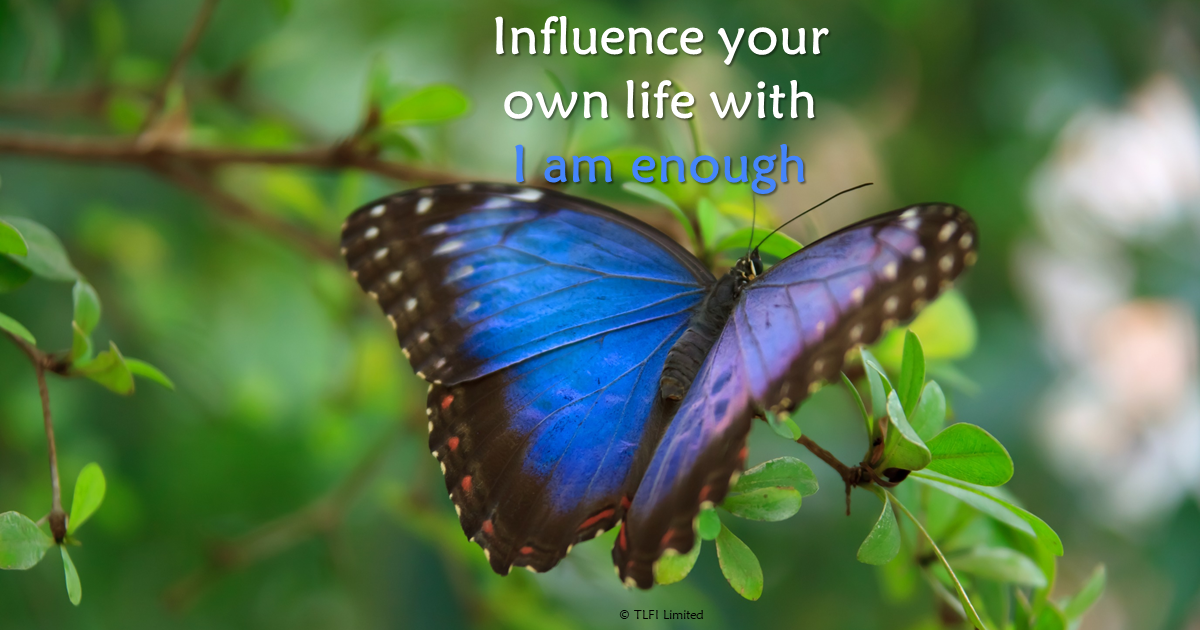
Take the time to become your own life influencer as you expouse the thought that “I am enough”. Building this thought within you can give you a sense of calm and happiness allowing you to change the direction of your life for the better. Take the opportunity to make it into a mantra, which you repeat every morning or even throughout the day, until it sinks in and your mind accepts it. As you allow this positive aspect to build within your life, you will begin to discover that many things are your own source of happiness. With ongoing positive reinforcement as your own influencer, you can begin to experience that “I am enough, I have enough, I have always been enough and I always will be enough.”

Joy in your Heart

When you find yourself in an unpleasant mood, consider that you cannot be open to new ideas, regardless of just how fantastic they are.  Without some joy in your heart, life can seem slow and often uninteresting. On the other hand, when you are happy, joyful or in a positive frame of mind, your heart, as well as your mind, are open to brand-new things.  Even thing which may have seemed normal holds a greater significance as you enjoy every moment that life had to offer.

Spiritual Gratitude

At the most basic, gratitude is something almost everyone has experienced, and have recognised the warmth of good things which can take place in their lives. While basic gratitude is a collection of ever-changing and fleeting feelings, the deeper aspect of gratitude is based on action, not merely experienced but expressed. This kind of gratitude is practised not just because it feels good, but because it is the appropriate thing to do; not just for one’s own good, but for the good of others or society. Such gratitude outdistances the domain of simple emotions and instead develops as a mindset, a stance, and a philosophy.

This practice of gratitude brings forth a myriad of tangible benefits to the mind and body. Research has revealed that practising gratitude improves the body’s immune system, boosts resilience to stress and anxiety, reduces depression, helps to improves one’s energies, and even aids you to sleep much better. The reasons to purposely practice this deeper form of gratitude, radiates over and above these corporeal effects, to those that embrace your inner self.

Anchor yourself

Breathing consciously is an effective means to completely transform energy and to anchor your mind in troubled times. When you find yourself in the midst of a reaction, you might have noticed how your breathing becomes rapid and shallow, your throat becomes tight, and you may even feel a pulsating sensation in your head or solar plexus. Your face may become hot and your chest might begin to tighten up. Conversely, when you are calm, feeling peaceful or happy, you typically breathe effortlessly.

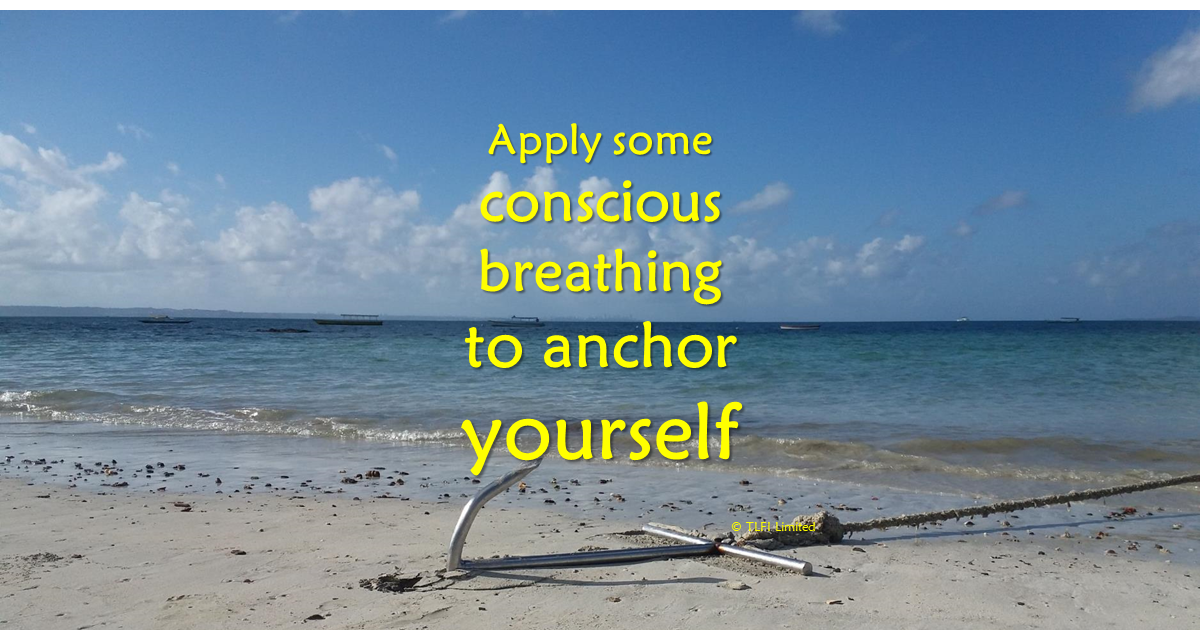
The next time when you experience an adverse reaction to anything in life, do your utmost to apply some conscious breathing. By engaging your mind to bring focus to your breathing for a few minutes, you can begin to moderate your reactions. Then as you begin to take deeper and more rhythmical breaths, they can help you to find an anchor for your calmness. Allow this anchor to grab hold and steady your emotions as you continue to breathe consciously.

Lessons of Life

It is commonly stated that life teaches us through our mistakes. When you slip up, simply ask yourself what you were destined to learn, as opposed to searching for justifications or to find others to blame. We grow more from our mistakes, errors or blunders when we recognise and accept such lessons with humility and grace.

More to Thinking

The human brain is comprised of roughly one hundred billion neurones, which are thereupon interconnected by trillions of connections, called synapses. Each of these associations may be relaying between one and a thousand transmissions per second, to fabricate the process which we equate to as thoughts or ideas in the physical brain.

To fully comprehend your thinking, it is necessary to appreciate that the human brain is just part of a complex system which entails the entire cognitive form.  Your thoughts become manifest, not merely as electrochemical connections of the brain, but also as electromagnetic impulses. Some cognitive scientists have started to acknowledge that thoughts are not confined to the brain, but concurrently occur in the body as well as the brain. It is this electromagnetic nature of thoughts and ideas, which enable them to spread through the brain, the body and the environment around us.